






Published: July 10, 2026
5 Benefits of Vendor Managed Inventory in 2026 - Comprehensive Explanation
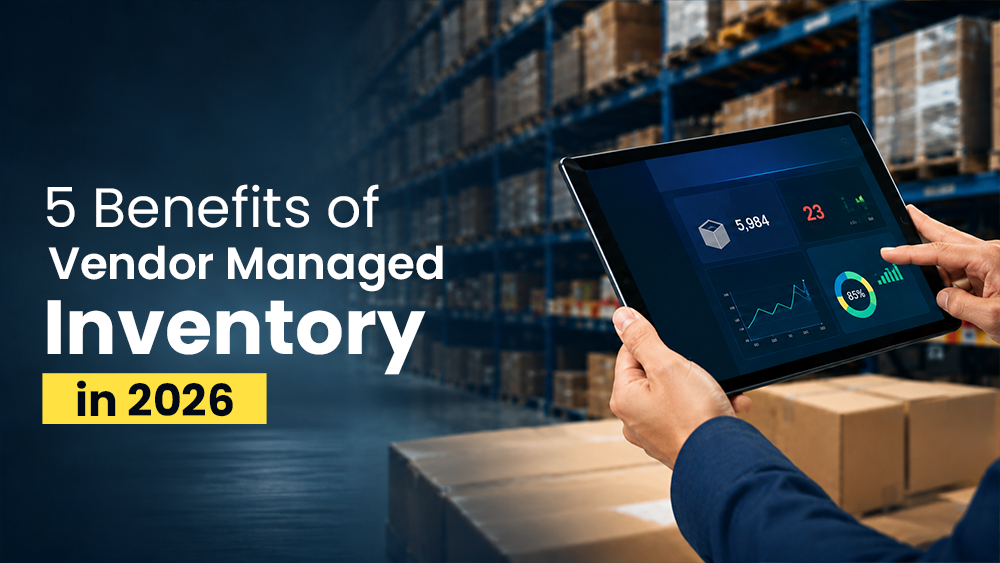
As supply chains become increasingly digital and customer expectations continue to rise, businesses are looking for smarter ways to manage inventory. Vendor Managed Inventory (VMI) has emerged as one of the most effective inventory management strategies in 2026. Instead of buyers manually tracking stock and placing purchase orders, suppliers monitor inventory levels and replenish stock automatically based on agreed parameters.
From manufacturers and distributors to retailers and healthcare organizations, companies are adopting VMI to improve inventory accuracy, reduce operational costs, eliminate stock shortages, and create stronger supplier partnerships. This guide explains what Vendor Managed Inventory is, how it works, its major benefits, implementation process, challenges, industry trends, and why it has become an essential supply chain strategy in 2026.
What is Vendor Managed Inventory (VMI)?
Vendor Managed Inventory (VMI) is an inventory management model in which the supplier takes responsibility for maintaining inventory levels at the customer's location.
Instead of waiting for purchase orders, suppliers receive access to inventory data through ERP systems, inventory management software, IoT devices, or cloud platforms. They continuously monitor stock consumption and replenish products whenever inventory reaches predefined reorder levels.
This collaborative model reduces manual intervention while ensuring products remain available whenever needed.
Why Vendor Managed Inventory is Important in 2026?
Modern businesses face numerous supply chain challenges, including:
- Rising inventory carrying costs
- Supply chain disruptions
- Demand fluctuations
- Global sourcing complexities
- Higher customer service expectations
- Shorter product life cycles
Vendor Managed Inventory addresses these issues by improving collaboration, enhancing visibility, and enabling proactive inventory planning.
Top 5 Benefits of Vendor Managed Inventory in 2026
1. Reduces Inventory Costs
One of the biggest advantages of Vendor Managed Inventory is cost reduction.
Businesses often maintain excess inventory to avoid stock shortages, resulting in higher warehousing costs and tied-up working capital.
With VMI:
- Inventory levels remain optimized
- Excess stock is minimized
- Warehouse utilization improves
- Carrying costs decrease
- Capital is freed for business growth
This creates a leaner and more efficient inventory system.
2. Prevents Stockouts and Improves Product Availability
Inventory shortages can lead to:
- Lost sales
- Production downtime
- Customer dissatisfaction
- Emergency procurement costs
Under Vendor Managed Inventory, suppliers monitor inventory continuously and replenish stock before shortages occur.
Benefits include:
- Higher product availability
- Better customer satisfaction
- Reduced production interruptions
- Improved order fulfillment
- Consistent supply chain performance
3. Improves Demand Forecasting Accuracy
Traditional forecasting often relies solely on customer purchase history.
Vendor Managed Inventory combines:
- Historical demand
- Seasonal trends
- Sales forecasts
- Market intelligence
- Real-time inventory data
This collaborative forecasting enables suppliers to plan production more accurately while helping buyers avoid inventory imbalances.
Improved forecasting leads to:
- Lower forecast errors
- Better production planning
- Reduced excess inventory
- Higher supply chain efficiency
4. Strengthens Supplier-Buyer Relationships
Vendor Managed Inventory transforms suppliers into strategic business partners rather than simple product vendors.
Both parties collaborate by sharing:
- Sales forecasts
- Inventory levels
- Consumption patterns
- Production schedules
- Business objectives
This transparency builds trust and improves long-term business relationships.
Strong supplier partnerships also lead to:
- Faster issue resolution
- Better communication
- Improved service levels
- Stable pricing
- Long-term supply reliability
5. Enhances Supply Chain Efficiency
Vendor Managed Inventory eliminates many manual inventory management activities, such as:
- Frequent purchase orders
- Manual stock counting
- Emergency procurement
- Administrative paperwork
Automation improves overall operational efficiency by reducing repetitive tasks and increasing inventory visibility.
Organizations benefit from:
- Faster replenishment
- Reduced procurement workload
- Better inventory turnover
- Improved warehouse efficiency
- Lower operational risks
How Vendor Managed Inventory Works?
A typical Vendor Managed Inventory process includes the following steps:
Step 1: Inventory Visibility
The customer shares inventory data with the supplier through integrated systems.
Step 2: Stock Monitoring
The supplier monitors inventory levels, demand trends, and consumption patterns in real time.
Step 3: Forecasting Demand
Using historical sales data and predictive analytics, the supplier forecasts future inventory requirements.
Step 4: Automatic Replenishment
The supplier ships products before inventory reaches critical levels.
Step 5: Performance Monitoring
Both parties regularly review KPIs such as inventory turnover, fill rate, stock availability, and service levels.
Additional Advantages of Vendor Managed Inventory
Besides the five major benefits, VMI also offers:
- Improved inventory accuracy
- Better working capital utilization
- Lower transportation costs
- Reduced obsolete inventory
- Faster inventory replenishment
- Increased order accuracy
- Better supplier performance
- Enhanced customer satisfaction
- Improved production planning
- Higher return on investment (ROI)
Industries Using Vendor Managed Inventory in 2026
Vendor Managed Inventory has become common across numerous industries.
Manufacturing
- Raw materials
- Industrial components
- Maintenance supplies
Retail
- Consumer goods
- Grocery products
- Electronics
- Apparel
Healthcare
- Medical devices
- Pharmaceuticals
- Surgical supplies
Automotive
- Spare parts
- Components
- Production materials
FMCG
- Packaged foods
- Beverages
- Personal care products
E-commerce
- Fast-moving inventory
- Warehousing
- Fulfillment centers
Technologies Powering Vendor Managed Inventory
Modern Vendor Managed Inventory solutions rely on advanced technologies such as:
Artificial Intelligence (AI)
AI predicts future inventory requirements using demand patterns.
Machine Learning
ML continuously improves forecasting accuracy based on historical data.
Internet of Things (IoT)
Smart sensors provide real-time inventory visibility.
Cloud-Based Inventory Platforms
Cloud software enables secure collaboration between buyers and suppliers.
ERP Integration
Enterprise Resource Planning systems synchronize purchasing, inventory, finance, and warehouse operations.
Predictive Analytics
Analytics help suppliers anticipate future inventory needs before shortages occur.
Challenges of Vendor Managed Inventory
Although VMI offers significant benefits, organizations should also address several implementation challenges.
Data Accuracy
Incorrect inventory data can result in poor replenishment decisions.
Technology Integration
ERP and inventory systems must communicate effectively.
Supplier Dependence
Businesses should choose reliable suppliers capable of managing inventory efficiently.
Trust and Collaboration
Successful VMI requires transparency and information sharing between both parties.
Performance Monitoring
Regular KPI reviews ensure that the VMI program continues delivering expected outcomes.
Best Practices for Successful Vendor Managed Inventory
Organizations should follow these best practices:
- Define inventory ownership clearly.
- Establish service-level agreements (SLAs).
- Share accurate, real-time inventory data.
- Integrate ERP and warehouse management systems.
- Use automated replenishment rules.
- Monitor inventory KPIs regularly.
- Build long-term supplier partnerships.
- Conduct regular performance reviews.
- Invest in predictive analytics.
- Continuously optimize inventory policies.
Vendor Managed Inventory Trends in 2026
Several trends are shaping the future of Vendor Managed Inventory:
- AI-powered inventory optimization
- Digital supply chain ecosystems
- Cloud-native inventory management platforms
- Predictive demand planning
- IoT-enabled inventory monitoring
- Automated replenishment workflows
- Real-time supplier collaboration
- Sustainable inventory practices
- Advanced supply chain analytics
- End-to-end inventory visibility
These innovations are making VMI more intelligent, scalable, and resilient across industries.
Key Performance Indicators (KPIs) for Vendor Managed Inventory
Businesses should measure the success of VMI using:
- Inventory Turnover Ratio
- Fill Rate
- Stockout Frequency
- Inventory Accuracy
- Order Fulfillment Rate
- Carrying Cost Reduction
- Lead Time
- Supplier Performance
- Forecast Accuracy
- Customer Service Level
Conclusion
Vendor Managed Inventory has become a strategic inventory management approach for businesses seeking greater efficiency, lower costs, and stronger supplier collaboration in 2026. By enabling suppliers to monitor inventory levels and automate replenishment, VMI minimizes stockouts, improves forecasting accuracy, reduces inventory carrying costs, and enhances overall supply chain performance.
As organizations continue embracing AI procurement tools like P2P, S2P source to pay, cloud platforms, IoT, and predictive analytics, Vendor Managed Inventory will play an increasingly vital role in building agile and resilient supply chains. Companies that adopt VMI with the right technology, clear communication, and reliable supplier partnerships can achieve higher operational efficiency, better customer satisfaction, and long-term competitive advantage.