






Published: June 25, 2026
What Is RFI In Procurement? Meaning, Examples, And Use Cases
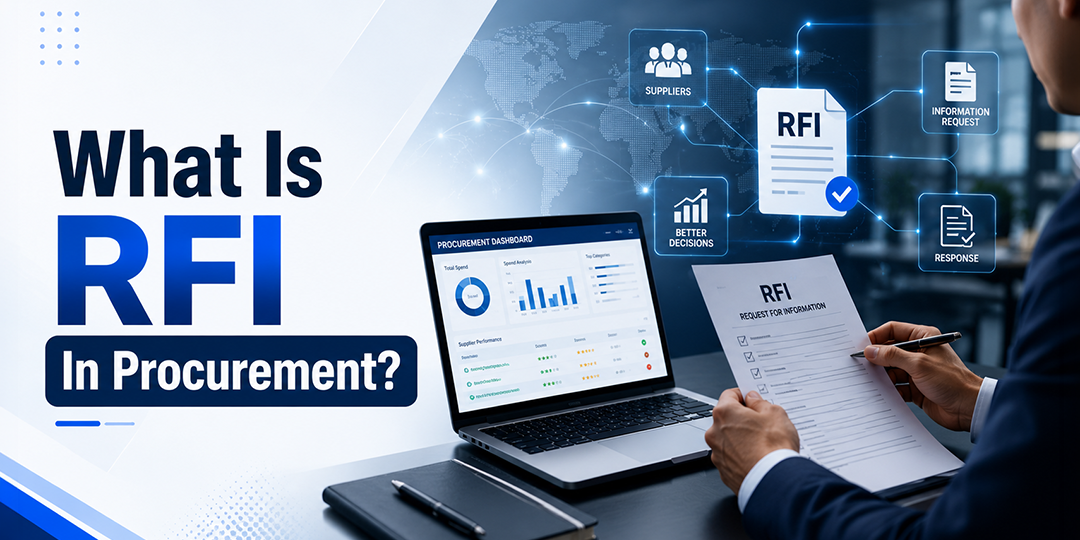
In today's ever-evolving business world, organizations and enterprises aim to make a complete and informed purchasing decision to optimize prices, reduce risks, and improve overall operational efficiency. Therefore, before partnering with a supplier or initiating a procurement process, the team requires essential and detailed information about various vendors, products, services, and other capabilities. Here comes the importance of RFI (request for information), which is a valuable and reliable document to derive every specific information for better operation and procurement process.
An RFI plays a pivotal role in laying down the foundation of complete strategic sourcing, helping buyers to collect preliminary information from potential suppliers and vendors to ease the procurement process and finally reach the RFQ analysis or RFP generation stage smoothly. Through this blog, you will come to knon about RFI mining, benefits, examples, and their important use cases.
Why Is RFI Important in Procurement?
In the modern procurement process, there are several complex decisions that need to be handled precisely. Ignoring the challenges may lead to cost augmentation and failure of procurement. Therefore, RFI helps organizations to get valuable insights about their purchase of goods and services before finalizing the order. It also assists in evaluating the supplier.
Key Objectives of an RFI
- Understand available solutions in the market
- Identify potential suppliers
- Gather supplier capabilities
- Explore innovative technologies
- Assess supplier expertise
- Shortlist vendors for future bidding
- Reduce procurement risks
- Improve sourcing decisions
How Does an RFI Work?
The RFI process typically occurs during the initial stage of strategic sourcing.
Step 1: Identify Procurement Need
First, the organization identifies its requirements but may generally fail to derive genuine information about suppliers and vendors.
Step 2: Prepare the RFI Document
The procurement teams encompass a complete questionnaire (RFI), which mostly covers:
- Company information
- Product offerings
- Industry experience
- Certifications
- Manufacturing capabilities
- Technical expertise
- Service capabilities
- Geographic coverage
Step 3: Send RFI to Suppliers
When all the questions are reviewed, the respective team distributes the RFI to various potential suppliers and vendors.
Step 4: Receive Supplier Responses
The suppliers receive the questionnaire and respond with their offering based on the company's requirements.
Step 5: Analyze Responses
Once you receive responses from various trusted and reliable suppliers, it's your responsibility to analyze the considerations.
Step 6: Create Vendor Shortlist
The qualified suppliers are shortlisted to fulfill and match the procurement requirements and are forwarded for the RFQ or RFP process.
Quick Peek at Key Components of an RFI Document
It is necessary to understand the key components of the RFI document to make the entire process flawless. A well-structured RFI follows the sections like:
1. Company Overview: It provides complete and comprehensive information about the buying organization.
Example:
- Company name
- Industry
- Business objectives
- Procurement requirements
2. Project Scope: It also describes the entire procurement needs, product information, service details, and business challenges.
Example: "Our organization seeks information regarding enterprise procurement software solutions capable of supporting multi-location sourcing operations."
3. Supplier Information Request: Once the vendor is finalized, the procurement team sends a questionnaire related to vendor qualification. The document consists of:
Example:
- Company history
- Number of employees
- Annual revenue
- Global presence
- Client references
4. Product and Service Capabilities: Now, this document consists of all the information and details you require from the supplier and their offerings.
Example:
- Product specifications
- Service portfolio
- Technology platforms
- Customization capabilities
5. Certifications and Compliance: The next step is to analyze all regulatory compliance with proper assessment.
Example:
- ISO certifications
- Industry-specific certifications
- Environmental compliance
- Quality management systems
RFI Example in Procurement for Better Understanding
With a real-world and comprehensive example provided below, it becomes easy for you to analyze the complete scenario of RFI and how it actually works. Suppose you are running a manufacturing company looking to implement an e-procurement platform.
Company Information
- How long has your company been operating?
- How many enterprise customers do you serve?
Technical Capabilities
- Does your platform support supplier onboarding?
- Can the system integrate with ERP software?
Security
- What cybersecurity standards do you follow?
- Do you offer cloud-based deployment?
Support Services
- What implementation services do you provide?
- What is your customer support structure?
The responses help identify the most suitable software providers before requesting detailed proposals.
Quick Look at the Common Use Cases of RFI in Procurement
We have discussed the common use cases of Request for Information in procurement, focusing on various industries. Let's have a quick look at them:
1. Technology Procurement: An organization can use the RFI to evaluate major things like:
- ERP software
- Procurement software
- Cybersecurity solutions
- Cloud infrastructure
- AI-powered platforms
2. Manufacturing Procurement: For manufacturers, an RFI is mostly used for identifying the
- Industrial machinery
- Production equipment
- Raw materials
- Automation solutions
3. Construction Projects: If you are running a construction business, you can utilize RFI to know
- Building materials
- Engineering services
- Construction equipment
- Project management solutions
4. Facility Management: For such sectors, RFI is used for evaluating
- Security services
- Cleaning services
- Maintenance contracts
- Energy management systems
5. Packaging Procurement: Businesses seeking packaging suppliers often use RFIs to gather information regarding:
- Packaging materials
- Custom packaging solutions
- Sustainable packaging options
- Manufacturing capacity
- Quality certifications
Platforms such as Packaging Moglix assist organizations by providing access to multiple packaging suppliers and customized procurement solutions, helping businesses evaluate suitable packaging options before initiating formal sourcing processes.
What are the Benefits of Using an RFI?
The implementation of RFI gives you an upper hand in creating a proposal workflow and elevates the business procurement process. It helps in many ways, such as
- Better Market Understanding: Generating a proper RFI questionnaire simplifies the visibility of all potential vendors, products, and technologies, which you may be unaware of.
- Improved Supplier Selection: It gives you a complete understanding of suppliers and vendors about their qualified products and can easily evaluate the potentiality.
- Reduced Procurement Risk: The pre-assessment of the suppliers reduces the operational risk and simplifies the sourcing process.
- Time Savings: It saves time in the procurement of various products and services, while meeting the standards before finalizing.
- Enhanced Competition: A proper RFI questionnaire broadens the pool of suppliers, leading to better outcomes.
What is the Difference Between RFI, RFQ, and RFP?
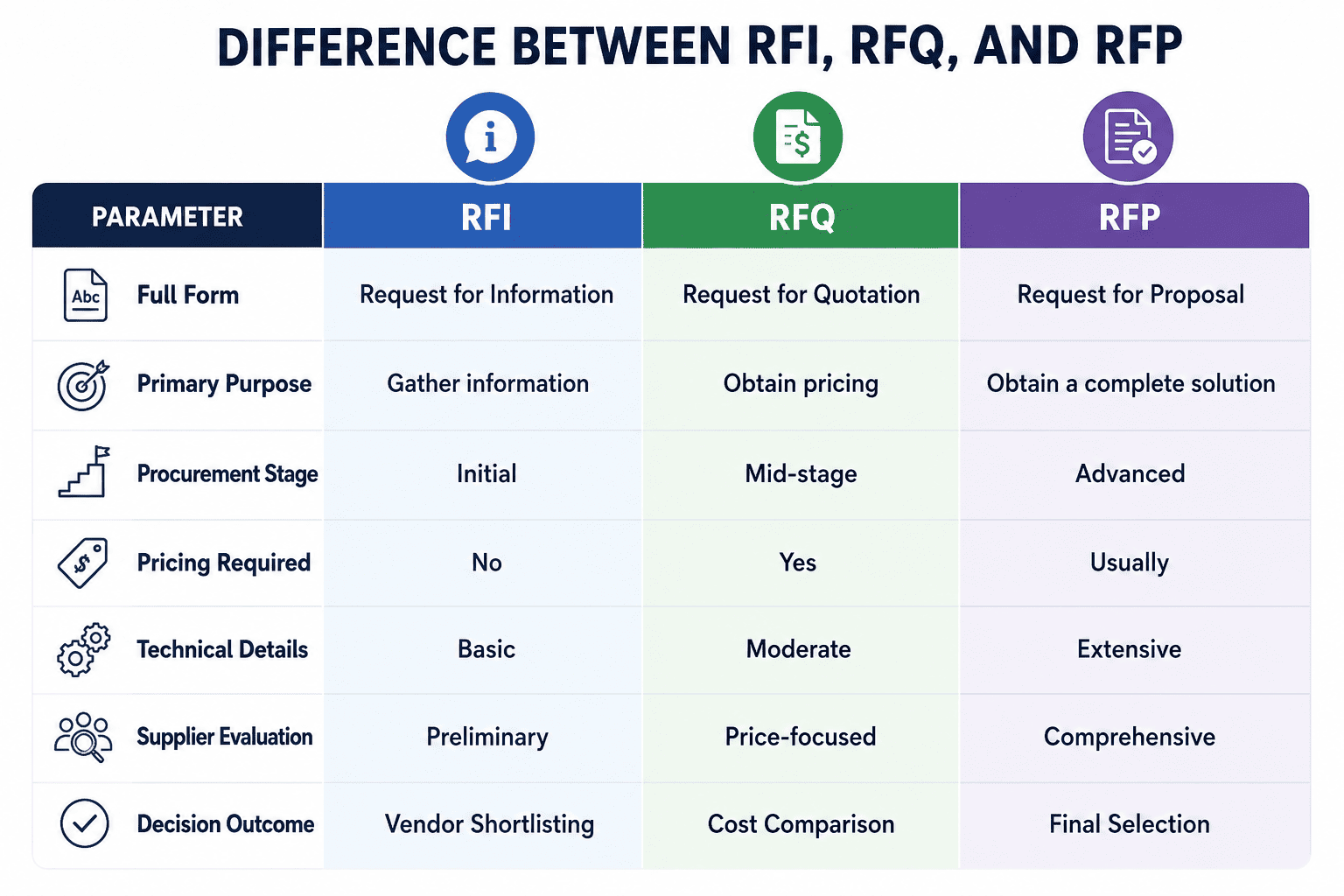
Quick Summary
- RFI: Learn about suppliers.
- RFQ: Compare prices.
- RFP: Evaluate complete solutions.
Common Mistakes to Avoid
- Requesting pricing information in an RFI
- Asking vague questions
- Sending RFIs to too few suppliers
- Ignoring supplier innovation opportunities
- Failing to define project goals
- Not reviewing responses systematically
Conclusion
An RFI (Request for Information) is a powerful and reliable tool in the procurement process to find and gather all essential information about the supplier, while understanding the complete portfolio of products, analyzing the value of the solution, and shortlisting potential customers. After this, businesses can simply move to RFQ and RFP effortlessly.
So whether you are running a manufacturing company, software solution, construction business, or any packaging sector, RFI gives you an upper hand in getting informed and strategic procurement of goods and services. Additionally, progressing to RFQs flawlessly. Also, if you want to automate your RFQ and spend analyses, consider using an AI-powered tool to analyze the RFQ with better insights at Cognilix. As procurement continues to evolve in 2026 and beyond, RFIs will remain a fundamental component of strategic sourcing and supplier discovery.