






Published: June 19, 2026|Author: Pradeep Mehra
RFQ vs RFP - What Are the Key Differences?
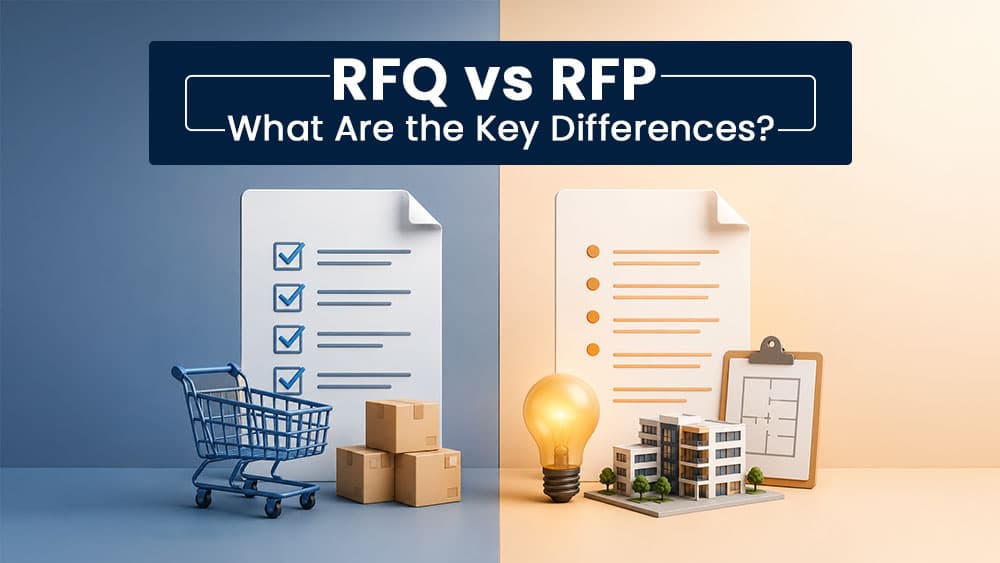
Procurement is the key process of any organization that needs proper sourcing of products, services, and other solutions effortlessly. The organization and business require evaluating suppliers and selecting the best vendor to procure raw materials, industrial equipment, and other professional services. However, while dealing with such an important process, two important documents are widely used, such as the RFQ (request for quotation) and the RFP (request for proposal). Both documents are designed to help buyers identify suitable and genuine suppliers, helping in various stages of the procurement process and for various purposes.
Nowadays, RFQ and RFP are undergoing a transformation process, and most businesses are looking for automated RFQ analytics software that provides better insights and simplifies spending. Cognilix is a one-stop platform for businesses and enterprises to integrate an AI-powered RFQ analytic tool for better data-driven procurement and improve PO - PR turnaround time.
Before you proceed further, it is necessary to understand the key differences between RFQ and RFP that can help in various procurement decisions, better supplier connection, improve vendor selection, reduce costs, and streamline the purchasing process. So, in this blog, we have comprehensively described the difference between RFP and RFQ, and their benefits and use cases.
What is an RFQ?
A request for quotation is the major and widely used procurement document, helping buyers to understand information about the product and service they are looking for and overall pricing information from suppliers. An RFQ focuses primarily on:
- Price
- Delivery timelines
- Payment terms
- Product specifications
- Quantity requirements
Example of RFQ Usage
A manufacturing company needs:
- 1,000 safety helmets
- Specific safety standards
- Defined material specifications
- Fixed delivery schedule
Once all the requirements are clear and concise, the company sends the RFQ to various suppliers and then compares the quotations that fall under their requirements and selects cost-effective options.
What is an RFP?
A request for proposal is also a crucial procurement document that is primarily used when buyers look for suppliers to prospe them about their solution, which can assist in simplifying the business challenges and project requirements. Unlike RFQs, RFPs evaluate vendors on multiple factors, including:
- Technical expertise
- Methodology
- Innovation
- Experience
- Project management capabilities
- Pricing
Example of RFP Usage
Suppose an organization is looking to implement a new procurement system and management solution. The company knows its goals and requirements precisely. But lacks in exact solutions requires, for which they ask for an RFP, which covers:
- Proposed solution
- Technical architecture
- Implementation strategy
- Support model
- Project timeline
- Cost estimate

When Should You Use an RFQ and RFP?
It is necessary to understand when you should use an RFQ or RFP. It is easier for you to process both documents for the right purpose.
An RFQ is appropriate when:
- Product Specifications Are Clear: The buyer knows exactly what needs to be purchased.
- Price is the Primary Decision Factor: Suppliers are offering comparable products and services.
- Procurement Is Routine: Recurring purchases often use RFQs. Examples include Safety equipment, Industrial tools, Electrical supplies, Office products, MRO items, Raw materials, etc.
- Multiple Qualified Suppliers Exist: RFQs work best when several vendors can provide similar products.
An RFP is suitable when:
- The Solution Is Complex: Projects requiring customization often need detailed proposals. Examples include ERP implementation, Digital transformation projects, Consulting services, Facility management contracts, etc.
- Innovation Is Important: Organizations want vendors to propose unique approaches.
- Technical Expertise Matters: The supplier's experience and methodology significantly influence project success.
- Long-Term Partnerships Are Required: RFPs help evaluate vendors beyond pricing.
What are the major Components of RFQ and RFP?
Knowing the specific components that contribute to building a powerful and reliable RFQ and RFP. Additionally, the standard components include:
Components of an RFQ:
- Company Information: Background of the Buying Organization.
- Product Specifications: Detailed technical requirements.
- Quantity Requirements: Expected purchase volume.
- Delivery Requirements: Location and timeline expectations.
- Commercial Terms: Payment and contractual conditions.
- Quotation Submission Deadline: Date by which suppliers must respond.
Components of an RFP:
- Executive Summary: Overview of the project.
- Business Objectives: Expected outcomes and goals.
- Scope of Work: Detailed project requirements.
- Technical Requirements: Specifications and performance expectations.
- Vendor Qualifications: Experience and certification required.
- Proposal Format: Guidelines for submission.
- Evaluation Criteria: How proposals will be assessed.
- Budget Information: Indicative project budget (optional).
- Timeline: Project milestones and deadlines.
What are the major Advantages of using RFQ and RFP?
Both documents play a pivotal role in simplifying the procurement process; however, serving different purposes. Let's have a quick look at their advantages.
Advantages of RFQ
- Faster Procurement Process: RFQs require less preparation and evaluation time.
- Easier Supplier Comparison: Standardized quotations simplify comparison.
- Cost Optimization: Organizations can identify the lowest qualified bidder.
- Reduced Administrative Effort: Minimal documentation compared to RFPs.
- Better Budget Planning: Provides accurate cost estimates before purchasing.
Advantages of RFP
- Better Solution Evaluation: Organizations can assess different approaches.
- Encourages Innovation: Suppliers can recommend improved solutions.
- Reduced Project Risk: Technical and operational capabilities are evaluated thoroughly.
- Higher Quality Vendor Selection: Decision-making extends beyond price considerations.
- Supports Strategic Procurement: Ideal for long-term projects and partnerships.
RFQ vs RFP: Comprehensive Understanding Through Real-World Examples
Example 1: Purchasing Safety Gloves
A manufacturing plant requires:
- 5,000 industrial safety gloves
- Specific safety certifications
- Defined material specifications
Best Choice: RFQ (The requirements are clear, making price comparison straightforward).
Example 2: Implementing Procurement Software
A company wants to digitize procurement operations but needs expert recommendations.
Best Choice: RFP (Vendors can propose different technologies, implementation methods, and support structures).
Example 3: Buying Electrical Components
A maintenance team requires:
- Circuit breakers
- Switchgear
- Cables
Specifications are already known.
Best Choice: RFQ (The focus is on pricing and delivery).
Example 4: Outsourcing Facility Management
An organization needs a vendor to manage multiple facilities across locations.
Best Choice: RFP (Evaluation requires assessing expertise, workforce capability, service quality, and pricing).
Conclusion
We find that both RFQ and RFP play a pivotal role by fulfilling different purposes during the procurement process. However, analyzing deeper, RFQ is important, which provides clear information on product specification, pricing, and other primary details. Whereas an RFP is ideal for complex projects to get better expertise, strategic, and other valuable innovations from the supplier end. It helps the organization or buyer to select the right document based on procurement purposes.
Chasing the right procurement document makes it easy to source products, improve cost efficiency, and get the best values from suppliers. Procurement teams have become resilient and efficient in dealing with the purchase of goods and have built a powerful and strategic sourcing. Additionally, businesses are moving to an automated version of RFQ integrated with ERP. If you are looking to buy AI-powered RFQ analytics software, Cognilix is the best platform to collaborate with.

Pradeep Mehra
About the Author: Pradeep Mehra is a passionate content strategist and B2B technology writer with a deep understanding of industrial procurement, e-commerce, and digital transformation. With years of experience in crafting research-backed articles, marketing copies, and brand stories, he specializes in making complex topics like AI in procurement, supply chain automation, fintech, and industrial product innovation easy to understand and engaging to read. Beyond his writing, Pradeep is driven by a passion for discovering market insights and building digital communication strategies that strengthen brand connections.