






Published: July 22, 2026
What Is a Centralized Procurement System? Process, Advantages, and Examples (2026 Guide)
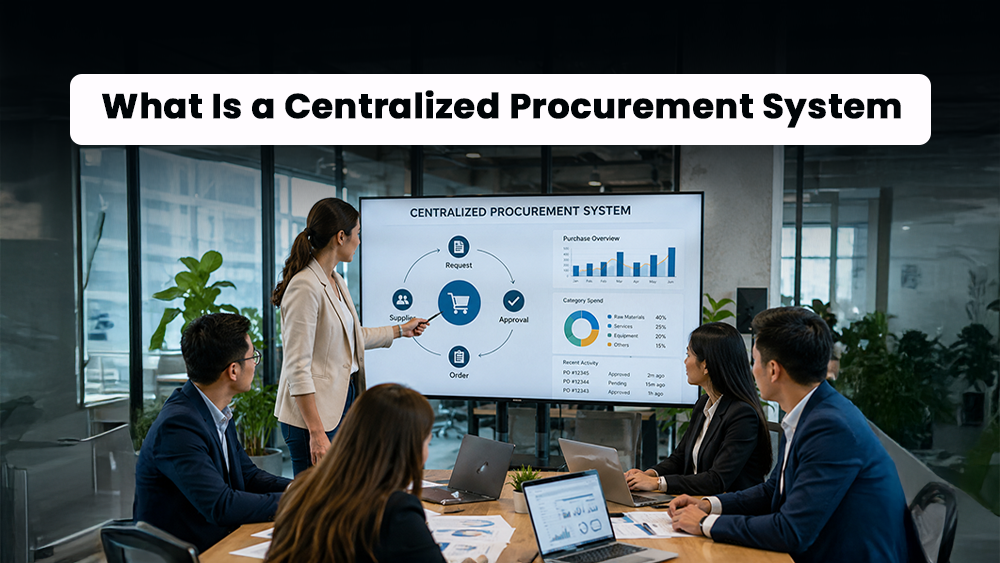
A centralized procurement system is a procurement model where a single department or central purchasing team is responsible for purchasing goods and services for the entire organization. Instead of allowing individual departments or business units to buy independently, all procurement activities are managed through one centralized function.
This approach helps organizations standardize purchasing processes, negotiate better supplier contracts, reduce procurement costs, improve compliance, and gain complete visibility into company-wide spending.
Today, S2P centralized procurement has become the preferred model for large enterprises, manufacturing companies, healthcare organizations, retail chains, construction companies, and government institutions that want greater control over procurement operations.
What Is Centralized Procurement?
Centralized procurement refers to a purchasing strategy in which all procurement decisions, including supplier selection, vendor negotiations, contract management, purchase approvals, and order placement, are handled by a central procurement department.
The central procurement team works closely with different departments to understand their purchasing requirements while ensuring that purchases align with company policies and budgets.
Instead of multiple departments buying from different vendors, the organization leverages its combined purchasing power to negotiate better prices and maintain supplier consistency.
How Does a Centralized Procurement System Work?
A centralized procurement system follows a structured workflow where every purchasing request is reviewed and approved before suppliers receive purchase orders.
The process typically includes:
- Departments identify purchasing requirements.
- Purchase requisitions are submitted to the procurement team.
- Procurement verifies budgets and approvals.
- Suppliers are evaluated or selected from approved vendor lists.
- Price negotiations and contract management take place.
- Purchase Orders (POs) are generated.
- Suppliers deliver products or services.
- Goods are inspected and verified.
- Invoice matching and payment processing are completed.
- Procurement performance is monitored using procurement analytics.
Centralized Procurement Process
Step 1: Requirement Identification
Departments identify the materials, equipment, or services they require.
Examples include:
- Office supplies
- Industrial equipment
- IT hardware
- Packaging materials
- Raw materials
- Safety equipment
Step 2: Purchase Requisition
The requesting department submits a purchase requisition containing:
- Product specifications
- Quantity
- Required delivery date
- Budget details
- Business justification
Step 3: Approval Workflow
The procurement system routes requests through predefined approval levels.
Approvals may involve:
- Department managers
- Finance team
- Procurement head
- Senior management
Digital approval workflows reduce delays and improve transparency.
Step 4: Supplier Selection
The procurement department evaluates suppliers based on:
- Product quality
- Pricing
- Delivery capability
- Certifications
- Past performance
- Compliance requirements
Organizations often maintain an approved supplier database.
Step 5: Contract Negotiation
Procurement professionals negotiate:
- Pricing
- Delivery schedules
- Warranty terms
- Payment conditions
- Service agreements
- Discounts
Bulk purchasing often results in significant cost savings.
Step 6: Purchase Order Creation
Once approved, a Purchase Order (PO) is issued containing:
- Supplier information
- Product details
- Quantities
- Delivery location
- Payment terms
- Purchase value
Step 7: Delivery and Inspection
After delivery, the receiving team verifies:
- Quantity
- Product quality
- Packaging
- Compliance with specifications
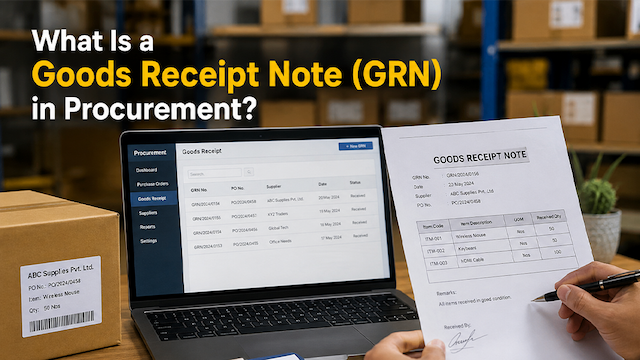
Goods Receipt Notes (GRNs) are generated.
Step 8: Invoice Verification
Finance performs a three-way match:
- Purchase Order
- Goods Receipt
- Supplier Invoice
This reduces payment errors and procurement fraud.
Step 9: Payment Processing
Approved invoices are processed according to payment terms.
The procurement team also monitors supplier performance after every transaction.
Key Features of a Centralized Procurement System
A centralized procurement system generally includes:
- Central purchasing authority
- Standard procurement policies
- Supplier management
- Contract management
- Budget control
- Automated approval workflows
- Procurement analytics
- Spend visibility
- Compliance monitoring
- Digital procurement software integration
Advantages of a Centralized Procurement System
1. Better Cost Savings
Since purchases are consolidated across departments, organizations can negotiate:
- Bulk discounts
- Better payment terms
- Lower shipping costs
- Long-term pricing agreements
This significantly reduces procurement expenses.
2. Improved Supplier Relationships
Working with fewer preferred suppliers enables companies to build long-term partnerships, resulting in:
- Better service
- Priority deliveries
- Improved quality
- Stronger collaboration
3. Standardized Procurement
A centralized system ensures every purchase follows the same process.
Benefits include:
- Consistent documentation
- Standard approval workflows
- Reduced purchasing errors
- Better audit readiness
4. Increased Spend Visibility
Centralized procurement provides a single view of organizational spending.
Procurement leaders can identify:
- Analysis of spending
- Duplicate purchases
- Budget variances
- Supplier concentration risks
5. Better Compliance
Organizations can enforce purchasing policies more effectively by ensuring purchases are made only through approved suppliers and contracts.
This minimizes:
- Maverick spending
- Policy violations
- Compliance risks
6. Stronger Negotiation Power
Purchasing larger quantities from selected suppliers increases bargaining power and often leads to:
- Lower prices
- Additional discounts
- Better warranty coverage
- Flexible payment terms
7. Improved Inventory Planning
Centralized procurement helps organizations coordinate purchases with inventory requirements, reducing:
- Overstocking
- Stock shortages
- Emergency purchases
8. Better Procurement Analytics
Procurement software generates reports on:
- Supplier performance
- Purchase trends
- Category spending
- Cost savings
- Procurement cycle times
These insights support data-driven decision-making.
Centralized Procurement vs Decentralized Procurement
Feature | Centralized Procurement | Decentralized Procurement |
Decision Making | Central procurement team | Individual departments |
Supplier Management | Unified | Multiple suppliers |
Cost Savings | High | Limited |
Standardization | High | Low |
Spend Visibility | Complete | Fragmented |
Compliance | Better | Lower |
Negotiation Power | Strong | Limited |
Procurement Speed | Moderate | Faster for local purchases |
Industries That Use Centralized Procurement
Many industries rely on centralized procurement to streamline purchasing and improve cost efficiency, including:
- Manufacturing
- Construction
- Healthcare
- Pharmaceuticals
- Automotive
- Oil and Gas
- Retail
- Hospitality
- FMCG
- Government organizations
- Educational institutions
- Logistics companies
Real-World Examples of Centralized Procurement
Manufacturing Company
A manufacturing company purchases steel, machinery, safety equipment, and raw materials through one procurement department. By combining orders from multiple plants, it negotiates better pricing and ensures consistent quality across locations.
Hospital Network
A healthcare group with several hospitals centralizes procurement of medicines, medical devices, surgical instruments, and personal protective equipment. This approach helps maintain quality standards, ensures regulatory compliance, and reduces procurement costs.
Retail Chain
A nationwide retail chain uses centralized procurement to source products for all its stores. Bulk purchasing allows the company to negotiate favorable supplier contracts, maintain uniform product quality, and simplify inventory management.
Future of Centralized Procurement
As organizations embrace digital transformation, centralized procurement systems are evolving with technologies such as:
- Artificial Intelligence (AI) for demand forecasting
- Procurement automation
- Robotic Process Automation (RPA)
- Cloud-based procurement platforms
- Predictive analytics
- Supplier risk management tools
- E-procurement systems
- Digital contract lifecycle management
These innovations help organizations improve efficiency, reduce manual work, and make more informed purchasing decisions.
Conclusion
A centralized procurement system enables organizations to manage purchasing through a single, coordinated function, improving cost control, supplier relationships, compliance, and operational efficiency. By following a structured procurement process and leveraging digital tools, businesses can gain greater visibility into spending, negotiate stronger supplier agreements, and streamline purchasing across departments. Now enterprises and businesses can take a demo of the P2P centralized procurement solution at Cognilix, India's leading AI powred end to end procurement and vendor management tool providers. Whether in manufacturing, healthcare, retail, or the public sector, centralized procurement remains a key strategy for building a more efficient and resilient supply chain.
Frequently Asked Questions (FAQs)
What is a centralized procurement system?
A centralized procurement system is a purchasing model where a single procurement department manages all purchasing activities across an organization, ensuring standardized processes, cost savings, and better supplier management.
What are the benefits of centralized procurement?
The main benefits include lower procurement costs, stronger supplier relationships, improved compliance, standardized purchasing, greater spend visibility, better contract management, and enhanced procurement analytics.
What is the centralized procurement process?
The process generally includes requirement identification, purchase requisition, approvals, supplier selection, contract negotiation, purchase order creation, delivery, invoice verification, payment, and supplier performance evaluation.
Which industries use centralized procurement?
Manufacturing, healthcare, construction, retail, automotive, logistics, government, education, oil and gas, pharmaceuticals, and FMCG organizations commonly use centralized procurement systems.
What is the difference between centralized and decentralized procurement?
Centralized procurement is managed by one central procurement team, offering better control, standardization, and cost savings. Decentralized procurement allows individual departments to make purchasing decisions independently, providing greater flexibility but less consistency.