






Published: May 7, 2026|Author: Pradeep Mehra
What Is a Purchase Order - Meaning, Process, Types, and Everything Explained
In today’s highly competitive and fast-paced business environment, companies must ensure that their purchasing activities are organized, accurate, and cost-effective. This is where efficient procurement becomes critical. Procurement is not just about buying goods or services—it involves planning, selecting the right suppliers, negotiating prices, tracking orders, and ensuring timely delivery. If this process is not managed properly, it can lead to delays, increased costs, inventory shortages, or even operational disruptions.
For both small businesses and large enterprises, maintaining control over purchasing is essential for smooth day-to-day operations. Small businesses rely on it to manage limited budgets and avoid overspending, while large organizations need structured systems to handle bulk purchasing, multiple vendors, and complex supply chains.
This is where purchase orders (POs) come into play. A purchase order acts as an official document that clearly defines what is being purchased, in what quantity, at what price, and under which terms. It eliminates confusion between buyers and suppliers and ensures that both parties are aligned before any transaction takes place.
What Is a Purchase Order (PO)?
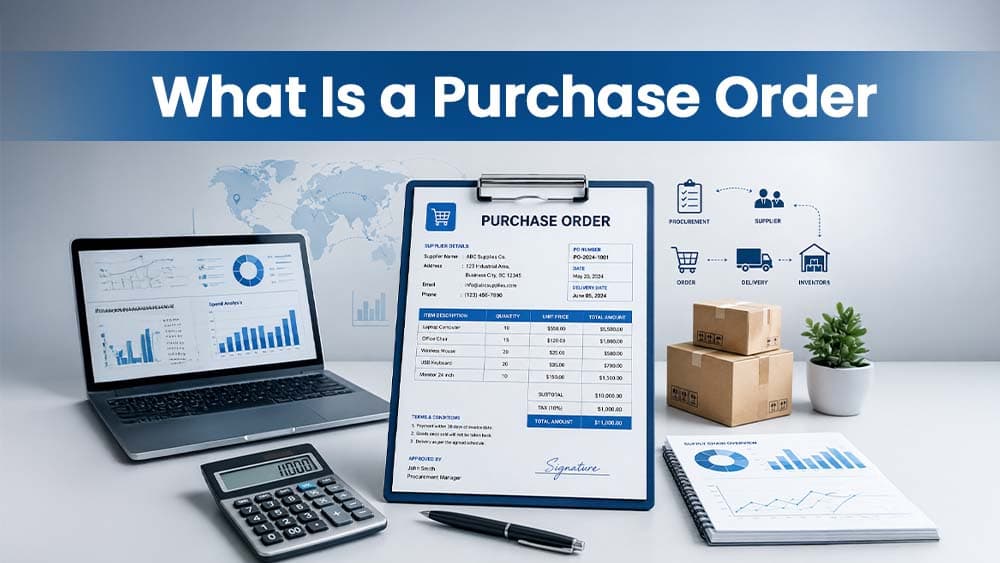
A purchase order (PO) is a formal, legally binding document issued by a buyer to a seller that specifies the details of products or services the buyer intends to purchase. It includes important information such as quantity, price, delivery date, payment terms, and product specifications.
Once accepted by the seller, the purchase order becomes a contractual agreement, ensuring both parties are aligned with the transaction details.
Key Elements of a Purchase Order
A well-structured purchase order typically includes:
- PO Number – Unique identifier for tracking
- Buyer & Supplier Details – Company name, address, contact info
- Product/Service Description – Detailed specifications
- Quantity & Price – Unit price and total cost
- Delivery Date & Location
- Payment Terms – Credit period, mode of payment
- Authorization Signature – Approval from authorized personnel
Purchase Order Process (Step-by-Step)
Understanding the purchase order process helps businesses maintain control and accountability in procurement.
1. Requirement Identification: The process begins when a department identifies the need for goods or services.
2. Purchase Requisition: An internal request is created and submitted for approval.
3. Vendor Selection: Suppliers are evaluated based on price, quality, and reliability.
4. Purchase Order Creation: Once approved, a PO is generated with all necessary details.
5. PO Approval: The document is reviewed and approved by management or procurement teams.
6. PO Issuance: The PO is sent to the selected vendor.
7. Order Fulfillment: The vendor delivers the goods/services as per the PO.
8. Invoice Matching & Payment: The invoice is matched with the PO and delivery receipt before payment is made.
What Are The Various Types Of Purchase Orders?
Different businesses use different types of purchase orders depending on their needs:
1. Standard Purchase Order
Used for one-time purchases with clear specifications and delivery dates.
2. Planned Purchase Order
Created in advance for future needs, but delivery dates may vary.
3. Blanket Purchase Order
Used for recurring purchases over a period, with agreed pricing but flexible quantities.
4. Contract Purchase Order
A long-term agreement with a supplier outlining terms and conditions without specific order details.
Understand the Importance of Purchase Orders in Business
Purchase orders are more than just paperwork; they play a strategic role in business operations.
- Better Financial Control: Helps track spending and avoid unauthorized purchases.
- Improved Inventory Management: Ensures timely procurement and prevents stockouts or overstocking.
- Legal Protection: Acts as a binding contract, reducing disputes between buyers and suppliers.
- Transparency & Accountability: Maintains a clear record of all transactions.
- Streamlined Procurement: Standardizes the buying process for efficiency.
Purchase Order vs Invoice
Basis | Purchase Order (PO) | Invoice |
Issued By | Buyer | Seller |
Purpose | Request for goods/services | Payment request |
Timing | Before delivery | After delivery |
Legal Status | Becomes binding when accepted | Proof of sale |
Best Practices for Managing Purchase Orders
To get the most out of your PO system, follow these best practices:
- Automate the Process using procurement software
- Use Standardized Templates for consistency
- Maintain Clear Approval Workflows
- Track PO Status Regularly
- Keep Accurate Records for Auditing
- Communicate Clearly with Vendors
Conclusion
A purchase order is a fundamental component of any business’s procurement system. It not only formalizes buying decisions but also enhances financial control, accountability, and operational efficiency. By understanding the meaning, process, and types of purchase orders, businesses can streamline their purchasing activities and build stronger supplier relationships. However, to automate the PO conversion ecosystem, you can integrate an S2P (Source-To-Pay) system into your ERP to gain the best outputs and eliminate manual efforts. You can avail this AI-powered tool at India's best B2B procurement automation platform, Cognilix. Whether you're managing a small enterprise or a large organization, implementing a structured purchase order system is a smart move toward better procurement management.

Pradeep Mehra
About the Author: Pradeep Mehra is a passionate content strategist and B2B technology writer with a deep understanding of industrial procurement, e-commerce, and digital transformation. With years of experience in crafting research-backed articles, marketing copies, and brand stories, he specializes in making complex topics like AI in procurement, supply chain automation, fintech, and industrial product innovation easy to understand and engaging to read. Beyond his writing, Pradeep is driven by a passion for discovering market insights and building digital communication strategies that strengthen brand connections.