






Published: April 29, 2026|Author: Pradeep Mehra
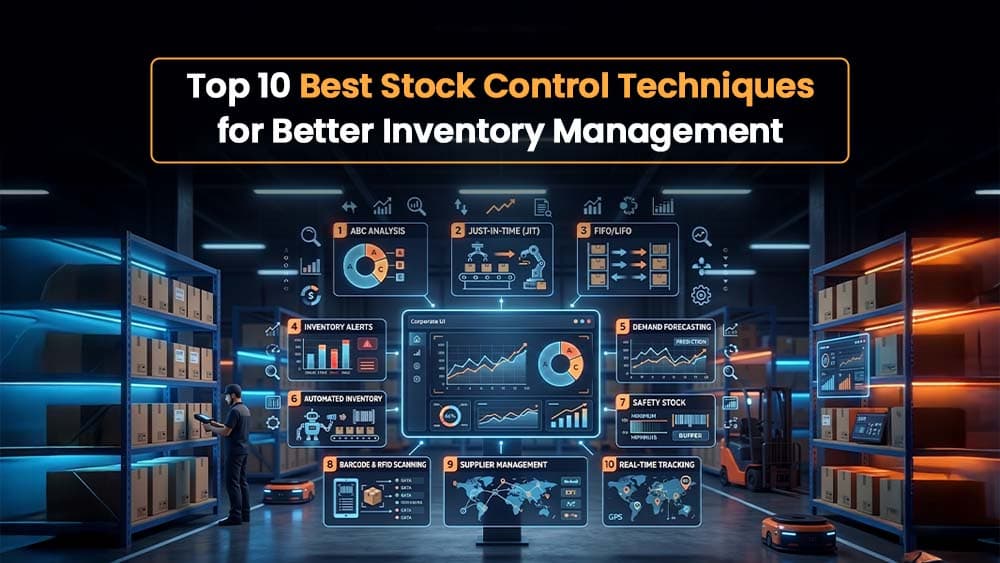
Top 10 Best Stock Control Techniques for Better Inventory Management
Maintaining the inventory appropriately is the prime functionality of any business to remain competitive. So, whether you are a part of any industry, such as a retail store, manufacturing units, or e-commerce, stock control techniques are utilized for balanced business trade. Holding too much inventory can lead to holding costs and provide results like stockouts and lost sales.
So, to create a balanced ecosystem of your entire products and manage them efficiently, it becomes a necessity to implement powerful and effective stock management techniques. This assists businesses in optimizing their inventory appropriately, reducing the probability of wastage, and improving overall business efficiency. Through this comprehensive blog, you will learn about the top 10 stock and inventory control techniques to manage inventory for long-term profitability.
What is Stock Control?
Stock control is also referred to as inventory control, which is a powerful process of managing and regulating the products, including ordering, storing, and frequent use of raw materials. The objective is to regulate the entire inventory process, which helps in:
- It eliminates the risk of overstocking and understocking
- Improve cash flow
- Reduce storage and holding costs
- Enhance customer satisfaction
What is the importance of Stock Control?
Before we delve into the topic, let's understand why stock control matters for businesses:
- Better fulfillment rate of orders
- Supports better decision-making with accurate data
- Enhances operational efficiency
- Reduces unnecessary costs
- It reduces the risk of losses due to damage, theft, or expiry
Adhere To the Most Effective and Top 10 Stock Control Techniques
Based on in-depth research, we have curated the top 10 stock control techniques that can help businesses streamline their entire inventory.
1. ABC Analysis (Always Better Control)
ABC analysis categorizes inventory based on value and importance:
- A Items: High value, low quantity (strict control required)
- B Items: Moderate value and quantity
- C Items: Low value, high quantity (basic control needed)
Benefits:
- Helps prioritize inventory management efforts
- Improves resource allocation
- Reduces carrying costs
2. Just-In-Time (JIT) Inventory
This technique can regulate the supply of goods when they are in high demand or sale.
Key Idea: Minimize inventory holding costs by reducing stock levels.
Benefits:
- Reduces storage costs
- Minimizes waste and obsolescence
- Improves cash flow
Challenges:
- Requires reliable suppliers
- Risk of stockouts if the supply chain is disrupted
3. Economic Order Quantity (EOQ)
This is a productive and effective formula that helps in knowing the appropriate order quantity, reducing the chances of inventory losses.
It balances:
- Ordering costs
- Holding costs
Benefits:
- Reduces overall inventory expenses
- Improves purchasing efficiency
- Helps maintain optimal stock levels
4. First In, First Out (FIFO)
This is one of the most effective and important techniques to sell the oldest stock first.
Best For:
- Perishable goods
- Products with expiry dates
Benefits:
- Reduces wastage
- Maintains product quality
- Improves the rotation of stock
5. Last In, First Out (LIFO)
These techniques are used only when you prioritize the selling of recently purchased items, before they degrade.
Best For:
- Non-perishable goods
- Industries dealing with fluctuating prices
Benefits:
- Useful during inflation
- Reflects current market prices in cost calculations
6. Safety Stock Management
This strategy plays a major role in preventing the stockout, which generally arises during supply delays and demand.
How It Works:
You maintain extra inventory beyond regular demand.
Benefits:
- Prevents lost sales
- Handles demand fluctuations
- Ensures business continuity
7. Reorder Point (ROP) Method
Reorder Point indicates when you should reorder stock before it runs out.
The formula includes:
- Lead time
- Average daily usage
Benefits:
- Prevents stockouts
- Maintains smooth operations
- Improves planning accuracy
8. Batch Tracking
This process helps in grouping the product in on batch and tracking them individually, which saves time and improves traceability.
Best For:
- Food and beverage
- Pharmaceuticals
- Manufacturing
Benefits:
- Improves traceability
- Helps in quality control
- Simplifies recalls
9. Inventory Audits (Cycle Counting)
Continuous monitoring of the inventory assist business to get accurate results between physical stock and recorded data.
Types:
- Annual physical count
- Cycle counting
Benefits:
- Decreases the chances of discrepancies
- Easy to find the theft or damage
- Improves data accuracy
10. Inventory Management Software
Modern businesses rely on software to automate stock control processes.
Features:
- Real-time tracking
- Automated reordering
- Reporting and analytics
Benefits:
- Reduces manual errors
- Saves time
- Enhances decision-making
Best Tips for Effective Inventory Management
As we all know, inventory management plays a crucial role in a business’s overall growth. However, it requires a reliable approach to obtain the best output. Let’s have a quick look:
1. Maintain Accurate Records: Always keep inventory data updated to avoid confusion and errors.
2. Forecast Demand: Use historical data and trends to predict future demand accurately.
3. Build Strong Supplier Relationships: Reliable suppliers ensure timely delivery and reduce risks.
4. Use Automation: Adopt inventory management tools to streamline operations.
5. Monitor Key Metrics: Track KPIs such as:
- Inventory turnover ratio
- Stockout rate
- Carrying cost
Conclusion
The stock control strategy is one of the most effective processes to manage inventory by optimizing entire inventory operations. However, you can use different techniques to streamline your entire inventory control precisely, such as ABC analysis, EOQ, FIFO, and other reliable inventory software. So, you can choose to rely on the above-listed inventory control method to refine the approach based on data and overall performance. Additionally, you can directly connect with Cognilix for an inventory planning platform and software.
FAQs
1. What is the best stock control technique?
There is no single best method. A combination of techniques like ABC analysis, FIFO, and reorder point works best.
2. How does stock control improve profitability?
It reduces waste, avoids overstocking, and ensures smooth operations, leading to better margins.
3. What tools are used for inventory management?
Inventory management software, ERP systems, and barcode scanners are commonly used.
4. What is the difference between stock control and inventory management?
Stock control focuses on maintaining optimal stock levels, while inventory management covers the overall process, including procurement, storage, and distribution.

Pradeep Mehra
About the Author: Pradeep Mehra is a passionate content strategist and B2B technology writer with a deep understanding of industrial procurement, e-commerce, and digital transformation. With years of experience in crafting research-backed articles, marketing copies, and brand stories, he specializes in making complex topics like AI in procurement, supply chain automation, fintech, and industrial product innovation easy to understand and engaging to read. Beyond his writing, Pradeep is driven by a passion for discovering market insights and building digital communication strategies that strengthen brand connections.