






Published: April 16, 2026
How Catalog Management Software Works: Process and Importance
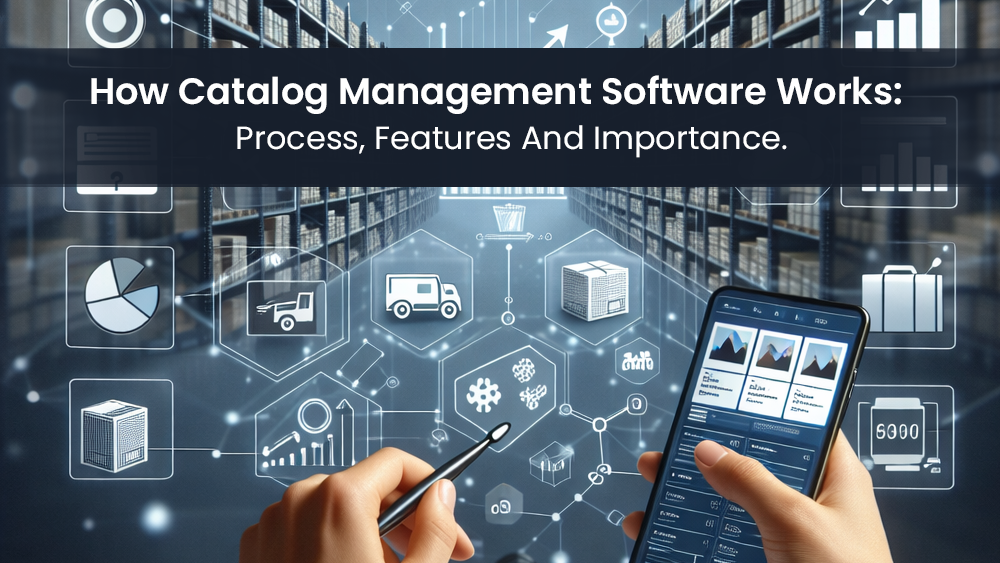
In the competitive market of procurement efficiencies, managing thousands of products, SKUs, pricing structures, inventory holdings, vendor and supplier details, and other important specifications can be a daunting task if driven manually. Therefore, opting for catalog management software tackles every situation while dealing with the above-mentioned process. A catalog management system helps organizations manage, update, standardize, and distribute procurement or product data throughout authorized teams and systems fluently.
So, no matter whether you are running a manufacturing business, distribution, procurement teams, or any type of B2B to B2C marketplace, opting for catalog management services streamlines the process with accuracy, speed, and compliance. For a better and more comprehensive understanding, we have elaborated a complete blog on the catalog management system work process, key features, and process.
What Is Catalog Management Software?
Catalog management software is one of the most effective digital solutions that help in organizing, managing, and enriching the product data or procurement of catalogs through smart and automated steps. It is a powerful and intelligent centralized system, which stores relevant data such as
- Product names
- SKUs or item codes
- Categories and subcategories
- Pricing information
- Vendor details
- Technical specifications
- Product descriptions
- Images and documentation
- Inventory availability
- Tax and compliance details
Why Catalog Management Matters in Modern Business?
Every business deal in a large number of products, which leads to managing various vendors at the same time. Therefore, it requires a structured and automated catalog management system to collect data in a single framework. It helps businesses compile spreadsheet data, frequent emails, supplier portals, and manual files in one place. This eliminates:
- Duplicate listings
- Incorrect pricing
- Outdated product specifications
- Procurement delays
- Poor customer experience
- Compliance issues
- Inefficient vendor management
How Catalog Management Software Works?
Before employing a catalog management tool, it is necessary to understand how it is structured, the workflow of data collection, standardization, approvals, publishing, and updates. Let's have a quick look at the steps:
Step 1: Data Collection and Import
The very first step in catalog management is to discover and collect precise data of products, services, or suppliers' information from various sources. It can fetch the data from:
- Supplier spreadsheets
- ERP systems
- Procurement platforms
- Manufacturer product sheets
- CSV or Excel uploads
- API integrations
- Marketplace feeds
Example:
A procurement company sourcing industrial tools from multiple suppliers may receive product lists in different formats. Catalog management software imports all those files into one unified platform.
Step 2: Data Standardization
After data collection, the software standardizes it into a common framework. This is one of the most important steps as it aligns the different data formats, naming conversion, and duplicate entries properly.
For example:
Supplier A | Supplier B | Standardized Catalog Entry |
Drill Mach. 500W | Electric Drill 500 Watt | Drill Machine 500W |
Bolt SS M8 | Stainless Bolt M8 | Stainless Steel Bolt M8 |
This process ensures:
- Uniform product naming
- Consistent categories
- Standard units of measurement
- Proper formatting of specifications
- Easier search and comparison
Step 3: Product Classification and Categorization
Once the data is standardized in a fixed structure, the product catalog management software places th products into predefined categories and sub-categories.
Common catalog categories may include:
- Electrical supplies
- Safety equipment
- Industrial tools
- Office supplies
- Packaging materials
- Raw materials
- MRO items
Step 4: Data Enrichment
The next step is adding extra useful information, which makes the data more productive. The data enrichment process is performed to create a complete and informative catalog structure.
This may include:
- Detailed product descriptions
- Technical specifications
- Product images
- Brochures and manuals
- Warranty details
- Compliance certificates
- GST/tax information
- Brand information
- Vendor-specific terms
This step is especially useful in both B2B procurement and eCommerce catalog management, where buyers need complete product details before purchasing.
Step 5: Validation and Error Checking
This step plays a major role in identifying errors in data, like duplicate products and incorrect pricing. This ensures the data is placed correctly and removes it before finalizing it.
The catalog management software checks for:
- Missing fields
- Duplicate products
- Incorrect SKUs
- Invalid pricing
- Mismatched units
- Incomplete specifications
- Expired supplier details
Example:
If one supplier uploads a product with the wrong tax slab or a missing HSN code, the system can flag it before publishing.
Step 6: Approval Workflow
The catalog of products and procured services cannot be published and delivered with internal consent and review. However, catalog management software automates the entire approval workflow with the right and respective stakeholders.
Approval stages may include:
- Supplier submission
- Procurement team review
- Category manager validation
- Finance pricing approval
- Final publishing authorization
Step 7: Publishing and Distribution
Once the data is finalized, the defined catalog can be easily published and distributed across various business channels and systems.
These may include:
- Procurement portals
- eCommerce websites
- ERP systems
- Supplier portals
- Inventory management software
- Internal buyer dashboards
- Marketplace platforms
Step 8: Real-Time Updates and Maintenance
Catalog management is not a one-time task. Prices change, products get discontinued, stock availability fluctuates, and vendors update specifications regularly.
Catalog management software helps businesses maintain data through:
- Scheduled updates
- Supplier sync
- Real-time API integrations
- Version control
- Audit trails
- Notification alerts
Understand the Catalog Management Software Process Precisely
Let's understand the process of catalog management software:
- Data import: The data of products, services, and vendors is collected and derived from multiple sources.
- Data standardization: The data is restructured into the right format to make it clean and consistent.
- Categorization: The products and services are organized ppeorp format into specific categories.
- Enrichment: The precise descriptions, documents, and images added to the information or data to make it reliable.
- Validation and Approval: In case of any duplicate data, information missing entries, wrong fields, and inconsistencies, they are validated and approved by the internal organization teams.
- Publishing and maintenance: The finalized catalogs are shared across multiple teams and platforms. However, continuous updates are streamlined to improve consistency in the future.
Importance of Catalog Management Software
Now, let’s understand why catalog management software is becoming increasingly important for procurement-driven and product-based businesses.
1. Improves Data Accuracy
Accurate product information is critical for procurement, inventory planning, and customer trust. Catalog management software reduces manual errors and keeps records clean.
2. Speeds Up Procurement Processes
When buyers can quickly find standardized and approved products, procurement cycles become much faster.
3. Enhances Supplier Management
Suppliers can upload and update product data more efficiently through structured workflows, making vendor coordination easier.
4. Reduces Operational Costs
Manual catalog handling takes time and resources. Automating catalog workflows reduces administrative effort and improves productivity.
5. Supports Better Decision-Making
With organized product data and analytics, procurement and category managers can make smarter purchasing decisions.
6. Ensures Compliance and Standardization
Catalog management software helps maintain procurement policy compliance, approved vendor lists, and standard product selections across the organization.
Conclusion
Catalog management software has become a powerful and reliable solution for every business to simplify data organization, storage, enrichment, and maintenance. It plays a critical role in importing the products from suppliers and vendors, validating every product and service, and publishing them to approved catalogs precisely. However, before you buy a product catalog management system, an e-commerce catalog management software, or any type of DBMS system catalog, it is necessary to cross-check features and other details. However, you can partner with Cognlix to utilize and procure AI-powered data standardization tools, which help in managing your catalog precisely. Cognilix is India's most reliable platform for various businesses and enterprises to purchase P2P automation tools, S2P software, an e-auction platform, and AI-powered data governance, as well as automated RFQ tools.