





Published: October 7, 2026
How to Choose the Right Procurement Automation Software?
Procurement has evolved far beyond raising purchase orders and negotiating with suppliers. Today, businesses are looking for faster purchasing cycles, better spend visibility, stronger supplier relationships, automated approvals, and accurate procurement data. This is where procurement automation software can make a significant difference. Modern procurement software can automate activities across sourcing, purchasing, supplier management, contract management, purchase orders, invoices, and spend analysis.
However, choosing the right procurement automation software is not simply about selecting the platform with the longest feature list. The right solution should match your business processes, procurement goals, existing technology stack, supplier ecosystem, and future growth plans.
This guide explains the key factors businesses should consider when choosing procurement automation software in 2026.
What Is Procurement Automation Software?
Procurement automation software is a digital solution designed to automate repetitive and time-consuming procurement activities. Instead of relying heavily on spreadsheets, emails, and manual approvals, organizations can create structured digital workflows for purchasing and supplier management.
Depending on the platform, procurement automation can cover:
- Purchase requisitions
- Purchase order automation
- Supplier onboarding
- Vendor management
- Contract management
- Invoice processing
- Approval workflows
- Spend analytics
- Procurement reporting
- Procure-to-pay (P2P)
- Source-to-pay (S2P)
10 Factors to Consider When Choosing Procurement Automation Software
1. Identify Your Procurement Challenges First
Before comparing procurement software solutions, identify the problems you actually want to solve.
Ask:
- Are purchase approvals taking too long?
- Do employees frequently purchase outside approved channels?
- Is supplier information scattered across different systems?
- Is spend visibility limited?
- Are purchase orders created manually?
- Does invoice processing consume significant time?
- Are procurement teams relying heavily on spreadsheets?
- Is it difficult to track supplier performance?
- Do procurement and finance teams work with disconnected data?
Creating a list of current procurement bottlenecks helps you evaluate software based on business requirements rather than impressive product features.
2. Look for End-to-End Procurement Automation
One of the most important considerations is the scope of automation. A basic purchasing tool may automate purchase orders, while a comprehensive source-to-pay software platform can connect sourcing, contracts, purchasing, receiving, invoicing, and payment-related processes.
Source-to-contract → Procurement → Procure-to-pay → Spend analytics
3. Evaluate Purchase Requisition and Purchase Order Automation
Purchase order automation is one of the most practical procurement automation use cases.
The software should ideally allow employees to create purchase requests digitally, route them automatically for approval, and generate purchase orders based on predefined rules.
Look for features such as:
- Digital purchase requisitions
- Automated approval workflows
- PO creation
- PO tracking
- Budget controls
- Purchase order templates
- Order status visibility
- Notifications and alerts
- Centralized procurement records
Automated PO workflows can connect requisitions, approvals, orders, receipts, and invoices, giving teams greater visibility into purchasing activities.
4. Check Supplier Management Capabilities
Suppliers are central to procurement, so supplier management software should be an important part of your evaluation.
A good procurement platform can help organizations centralize supplier information and streamline activities such as:
- Supplier onboarding
- Vendor registration
- Supplier data management
- Document collection
- Supplier evaluation
- Supplier performance tracking
- Compliance monitoring
- Supplier communication
For larger organizations, supplier risk management can also become important as procurement teams need greater visibility into their supply base.
5. Assess Sourcing and RFQ Features
If your procurement team regularly collects quotations, compares suppliers or conducts negotiations, choose a platform with strong e-sourcing software capabilities.
Look for functionality such as:
- RFQ management
- RFP management
- Supplier bidding
- Quote comparison
- Online negotiations
- Supplier evaluation
- Sourcing event management
- Bid analysis
This can help procurement teams move away from scattered email-based quotation management toward a more structured sourcing process.
6. Prioritize ERP and Business System Integration
Even the best procurement automation software can become difficult to manage if it operates separately from your existing business systems.
Before selecting a solution, check whether it integrates with your:
- ERP system
- Accounting software
- Finance systems
- Inventory management system
- Supplier databases
- HR systems
- Enterprise applications
- Payment systems
Integration allows procurement data to move between systems and reduces duplicate data entry.
Cognilix notes that S2P suites can be ERP- and financial-system-agnostic, with data flowing across procurement activities and connected documents.
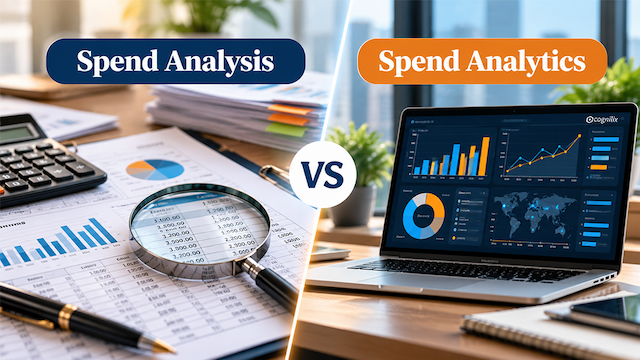
7. Look for Strong Spend Analytics
Spend management software should not only automate transactions; it should help businesses understand where their money is going.
Look for dashboards and analytics covering:
- Total procurement spend
- Supplier spend
- Category spend
- Purchase trends
- Maverick spend
- Contract compliance
- Purchase order status
- Supplier performance
- Savings opportunities
Spend analytics can turn procurement data into actionable information for sourcing and purchasing decisions.
8. Evaluate AI and Intelligent Automation Features
AI is increasingly becoming part of modern procurement platforms. Cognilix's 2026 research notes that the S2P market is seeing increasing investment in procurement orchestration and AI agents.
However, businesses should evaluate AI based on practical use cases rather than simply choosing software because it claims to be "AI-powered." Useful AI in procurement applications may include:
- Spend classification
- Supplier discovery
- Demand analysis
- Contract data extraction
- Invoice processing
- Procurement recommendations
- Anomaly detection
- Supplier risk analysis
- Natural-language procurement search
- Automated workflow assistance
9. Consider User Experience and Adoption
A procurement platform can have advanced features but still deliver limited value if employees and suppliers find it difficult to use.
Evaluate:
- User interface
- Mobile accessibility
- Search functionality
- Procurement request experience
- Supplier experience
- Approval workflows
- Dashboard usability
- Training requirements
- Self-service capabilities
User adoption is especially important because procurement automation often involves employees outside the procurement department. A simple, intuitive system can encourage employees to follow approved procurement processes instead of bypassing them.
10. Calculate Total Cost and Expected ROI
Don't evaluate procurement automation software pricing based only on the subscription or license fee.
Consider the complete cost of ownership, including:
- Software subscription
- Implementation
- Integration
- Data migration
- Customization
- Training
- Supplier onboarding
- Support
- Maintenance
- Future upgrades
Then compare these costs with expected business benefits such as reduced processing time, lower manual effort, improved compliance, better spend visibility, and potential procurement savings.
How to Select Procurement Automation Software: A Simple Process
Follow these steps to make the selection process more structured:
Step 1: Map your current procurement process: Document your existing requisition, sourcing, purchasing, receiving, and invoice workflows.
Step 2: Identify automation opportunities: Find repetitive activities that consume time or frequently create errors.
Step 3: Define functional requirements: Create a list of must-have and nice-to-have features.
Step 4: Evaluate integration requirements: Identify the ERP, finance, inventory, and other systems that need to connect with the platform.
Step 5: Shortlist suitable vendors: Compare platforms against your requirements rather than selecting purely on brand recognition.
Step 6: Request product demonstrations: Ask vendors to demonstrate your actual procurement scenarios instead of generic presentations.
Step 7: Test usability: Allow procurement, finance, IT, and business users to evaluate the platform.
Step 8: Calculate ROI and total cost of ownership: Estimate implementation costs alongside expected efficiency and procurement benefits.
Step 9: Plan implementation: Start with priority workflows and expand automation progressively.
Conclusion
Choosing the right procurement automation software starts with understanding your organization's procurement challenges, workflows, and long-term objectives. The ideal solution should help automate repetitive purchasing activities while improving spend visibility, supplier management, approval workflows, procurement analytics, and compliance. Instead of selecting software solely based on the number of features or the lowest price, evaluate its ability to integrate with your existing systems, support users and suppliers, scale with business growth, and deliver measurable procurement value.
For organizations moving toward digital procurement, an integrated source-to-pay or procure-to-pay automation platform can provide a foundation for connecting sourcing, purchasing, supplier management, invoicing, and analytics in a more unified workflow. Cognilix is the one-stop destination for enterprises to find the best AI-automated procurement software.
Frequently Asked Questions
What is procurement automation software?
Procurement automation software digitizes and automates purchasing activities such as requisitions, approvals, purchase orders, supplier management, sourcing, invoices, and spend analysis.
How do I choose procurement automation software?
Start by identifying procurement challenges, defining required features, checking ERP integrations, evaluating supplier and user experience, comparing vendors, and calculating total cost of ownership and expected ROI.
What features should procurement software have?
Key features can include purchase requisition and PO automation, supplier management, e-sourcing, contract management, invoice automation, approval workflows, spend analytics, ERP integration, and reporting.
What is the difference between P2P and S2P software?
Procure-to-pay generally focuses on purchasing through payment, while source-to-pay covers a broader process that can include sourcing, contracts, procurement, receiving, and payment.
Can AI be used in procurement automation?
Yes. AI can support use cases such as spend analysis, supplier discovery, invoice processing, contract analysis, risk monitoring, and procurement recommendations. The appropriate use cases depend on the organization's data, processes, and requirements.