






Published: October 13, 2026
Spend Analysis vs Spend Analytics: What Is the Difference?
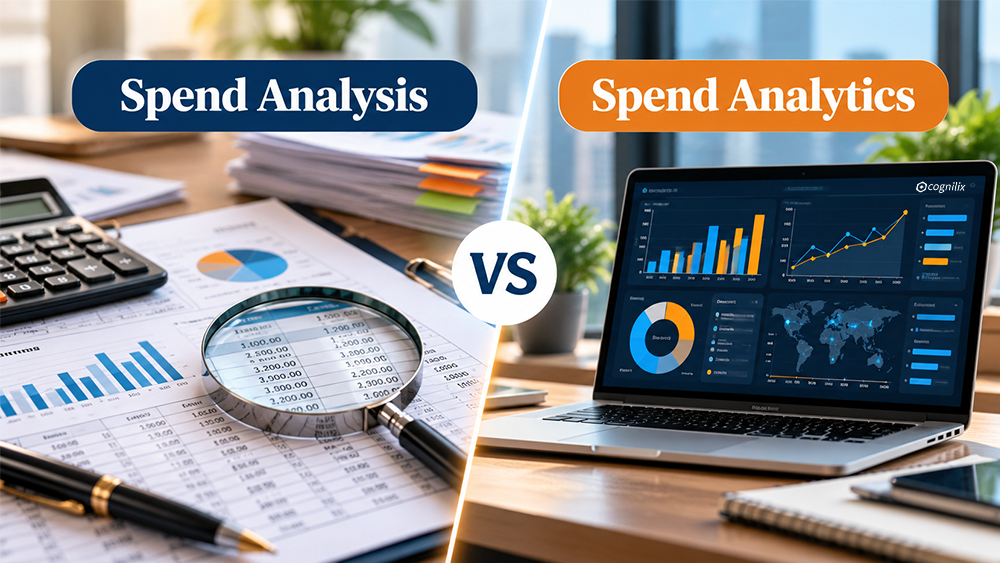
Businesses want to stay ahead in terms of every action in the entire procurement process, or spending, in controlling the cost to make suitable and efficient purchasing decisions. So, two important aspects of spending, spend analysis and spend analytics, have been crucial for procurement teams to analyze their pattern of spending. They may sound a little similar but have different approaches, procedures, and results.
When it comes to spend analytics, it uses reliable and data driven sights to identify valuable patterns, predict spending, and create better plans for future procurement decisions. Whereas spend analysis primarily focuses on historical procurement data to analyze spending.
What Do You Understand By Spend Analysis?
Spend analysis is a comprehensive and reliable approach for accumulating, revealing, and categorizing data on how an organization spends. It helps businesses to simply identify unwanted expenses, vendor overlaps, duplicate procurement, and easy cost-saving strategies. The other benefits consist of:
- Spend analysis primarily focuses on developing cost-saving opportunities across various categories.
- Helps in analyzing purchasing patterns and then tracks every spending with suppliers.
- Easy for businesses to negotiate various types of contracts.
- Improves the visibility of pricing, allocation of budget, and eliminates compliance issues.
What do you understand by Spend Analytics?
Spend analytics is one of the most advanced versions of controlling spending by analyzing data, automating the procurement process, and even forecasting actionable insights for spending. It helps businesses report emerging trends and improve future purchasing decisions. Have a quick look at other benefits
Key benefits of spend analytics include:
- Complete control over spending trends and performance.
- High accuracy in terms of data forecasting
- Easy to identify vendor price risk and spending patterns.
- Manage future procurement with better cost optimization.
Spend Analysis vs Spend Analytics: Key Differences
Spend analysis remains one of the traditional methods to analyze the money spent by the organization and helps in finding inefficiencies and achieving cost savings. Whereas spend analytics helps organizations in finding the efficiency in the budget and make decisions based on valuable insights and reliable data. We can say it focuses on a data-driven approach and predicts results more accurately.
The main differences include:
- Approach: In terms of approach of both strategies, spend analysis primarily interprets the data based on purchasing and spending history, whereas spend analytics not only studies the history but also creates insights and do advance analysis through data.
- Purpose: In terms sof purpose, spend analysis helps in finding the gaps in spacing procss and evolving cost-saving opportunities. Spend analytics predicts inefficiencies through data and creates strategies for saving costs.
- Technology: When it comes to technology, spend analysis uses simple strategies like manual spreadsheets and reporting tools, whereas spend analytics uses high-end and automated tools and dashboards.
- Insights: In terms of insights, spend analysis forecasts spending patterns and processes, and spend analytics showcases severe risks, undiscovered trends, and powerful strategies for better results.
- Business impact: Both strategies have an immense impact on the business with better cost visibility. However, spend analytics provides an extra advantage by improving cost optimization in the procurement process.
Which Is Better For Your Business?
Businesses may feel in a dilemma while selecting between these two effective and reliable approaches to cost saving and optimization.
- You should choose spend analysis if your only goal is to identify expenditure, analyze the cost of suppliers, and find better opportunities for cost savings.
- You should choose spend analytics if you want a complete analysis of overall spending, forecast results, automate reporting, and reliable procurement optimization.
However, organizations can also implement both strategies with a data-driven approach to constantly enhance overall management of supplier and cost control.
Conclusion
Spend analysis has been one of the useful strategies for businesses to analyze their spending, whereas spend analytics provides deeper insights with decision-making support. However, both have different ways of working and deliver better outcomes. Spend analytics comes with a more advanced way of forecasting trends and predicts the cost-saving approach properly. Additionally, businesses can combine both strategies for procurement teams. They can improve spending visibility and make smarter purchase decisions.