






Published: February 15, 2026
Procure to Pay (P2P) Automation: Meaning, Process, Cycle and Importance
%20Automation-61540617-5671-4a11-a7eb-e4862fd3a065.jpg&w=2048&q=75)
In today’s competitive world of business, every organization puts its back into reducing costs, improving efficiency, and maintaining complete financial stability with better control. However, one of the most critical business processes, the P2P cycle, has been an effective process that directly impacts the supplier relationships, cash flow, and operations transparency. But a manually operated procure to pay process can be daunting and time-consuming, and automating this process, which is also known as procure to pay automation, has become a powerful and strategic necessity for many organizations, streamlining business with advanced technology. With this upgrade, businesses can improve their growth and establish relationships with suppliers seamlessly.
What is the P2P (Procure to Pay) Process?
The procure to pay solution is a structured workflow of various types of procurement activities, which streamlines every purchase from authorizing to tracking and paying it correctly. Therefore, a P2P process helps in controlling spending, enhancing financial transparency, and adhering to compliance.
Key Stages of the Procure to Pay Process
- Need Identification and Purchase Requisition
- Approval Workflow
- Supplier Selection and Purchase Order Creation
- Goods or Service Receipt
- Invoice Submission and Matching
- Invoice Approval
- Payment Processing
- Record Keeping and Reporting
How Procure to Pay Automation Works?
The automation of the P2P cycle is necessary for eliminating the time-consuming and daunting steps performed manually. Let's have a quick look at the complete process.
- Requisition Creation: The employees or buyers can raise a PR (Purchase Request) by using a centralized buying platform to get pre-approved vendors and catalogs.
- Approval Workflow: After the raising of a purchase requisition, it automatically directs and routes to the right approver based on predefined rules.
- Purchase Order generation: The approved requisitions are precisely converted to a digital purchase order and directly sent to the right suppliers.
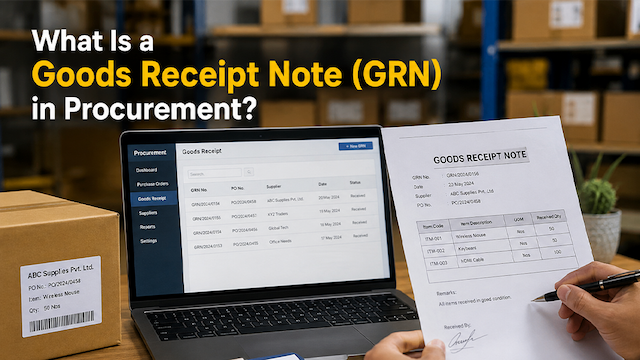
- Goods Receipt: The receipts are generated and automatically get recorded in the system.
- Invoice processing: The invoices from the supplier’s side are cross-checked with POs and receipts to avoid discrepancies.
- Payment Execution: Once all the invoices are approved, they are scheduled with the ERP system, the integrated banking partner, and the payment gateways.
- Reporting and Compliance: After the transactions are made, every process is stored digitally for audits and spend analysis.
Why Procure to Pay P2P Automation Is Important?
The importance of P2P automation has many advantages for better outcomes and more control over financial transactions with long-term relationships with suppliers. However, there are other advantages to such as:
Improves Operational Efficiency
The automation of the P2P cycle improves efficiency by speeding up the time-consuming processes. It replaces repetitive tasks like invoice validation, data entry, approval follow-up, etc. This assists finance and procurement teams in handling strategic activities like cost optimization and supplier negotiations.
Reduces Errors and Fraud Risks
Manual P2P processes have a higher chance of errors, such as duplicate entries, incorrect data entry, delays in approval, and loss of transactions. The automation of procure-to-pay minimizes human intervention and reduces the risk of overpayment, fraud, and compliance violations.
Enhances Cost Control and Spend Visibility
P2P automation provides you with complete and real-time visibility into every spending that occurs. It allows businesses to track every single transaction and money being spent and analyze the maverick buying. These steps control the cost and enhance budgeting accuracy.
Faster Invoice Processing and Payments
The automated invoices capture and matching saves time and accelerates the payment and transaction process. It leads to one-time payments with faster invoice approvals and eliminates the risk of late payment penalties
Strengthens Supplier Relationships
One of the most important aspects of integrating procure-to-pay software is not only automation but also strengthening relationships with suppliers. Proper automation ensures transparency and consistency in dealings with vendors and suppliers.
Ensures Compliance and Audit Readiness
An automated P2P system keeps a record of every process and data precisely for later audits and spend analysis. This ensures compliance with tax regulations seamlessly.
Improves Cash Flow Management
Finance teams can manage the cash flow effortlessly and effectively with proper visibility of the payment schedules and outstanding liabilities. An automotive P2P system provides a better forecast to optimize working capital.
Quick Look at The Key Features of Procure to Pay Automation Software
Before opting for a procure-to-pay tool or platform, it is necessary to understand the various features you can enjoy with such powerful P2P automations.
- End-to-end process integration
- Configurable approval workflows
- Supplier onboarding and portal access
- Invoice OCR and e-invoicing support
- ERP and accounting system integration
- Advanced analytics and reporting
- Compliance and security features
Procure to Pay Automation vs Manual P2P
Aspect | Manual P2P | Automated P2P |
Processing time | Slow | Fast |
Error rate | High | Minimal |
Spend visibility | Limited | Real-time |
Compliance | Difficult to track | Built-in controls |
Scalability | Low | High |
Conclusion
Procure to pay P2P automation has become the first choice for many businesses to stay competitive, cost-efficient, and compliant. Integrating powerful procurement software and payment processes reduces the chances of errors, improves visibility, and establishes strong relationships with suppliers. However, investing in the right P2P players or platform is necessary to find reliable and best software based on your requirements. Cognilix, an AI-led procurement SaaS platform, provides a complete automation of P2P to transform your operation into a strategic and real-time operation. They offer you Source to pay (Cerebra), which gives you the upper hand during your entire procurement journey.