






Published: June 9, 2026|Author: Pradeep Mehra
What Is the Data Cleaning Process: Step-by-Step Guide 2026
In today's ever-evolving world, every business is keen to manage a large amount of data from procurement teams and products. The raw data fetched through various processes mostly tend to be inaccurate, unaligned, duplicated, and even incomplete. This can lead to inconsistencies and consume more time to take action. Here comes the importance of the data cleaning process, which plays a pivotal role in the collection of insightful and actionable data through a reliable process.
Data cleaning is a key step in managing the entire collection of data through an effective process and analyzing it effectively. This process helps businesses to make decisions, report creation, and even use machine learning to take actions based on various use cases. An improper Data cleaning strategy impacts the growth of the business due to poor forecasting and price fluctuation. Today, we provide you with a complete guide to the data cleaning process.
What Is Data Cleaning?
Data cleaning is an effective and efficient process to identify, correct, remove inconsistencies and errors, and improve the data; identify issues while collecting the data to take reliable actions. The main objective of data cleaning is to improve the overall quality and accuracy of the data to make impactful decisions through relevant and trustworthy information.
Examples of data issues include:
- Duplicate customer records
- Missing values
- Incorrect spellings
- Invalid email addresses
- Inconsistent date formats
- Outdated information
- Data entry errors
Why Is Data Cleaning Important?
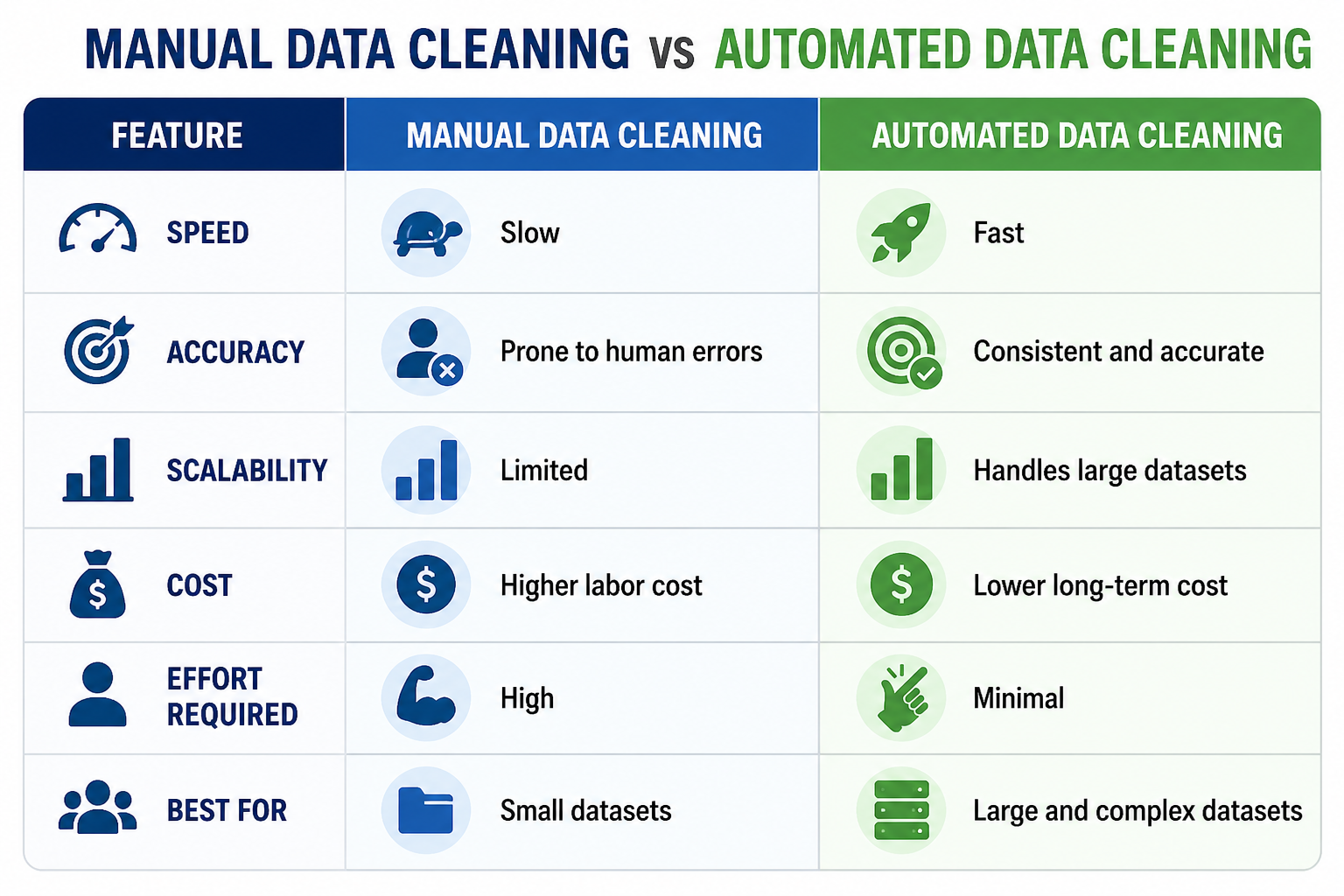
Organizations unable to manage the data in bulk require a reliable and efficient data cleaning process to manage and take data-driven decisions. The poor management of data can impact customer experience and operations. It has many benefits, such as:
- Improved Decision-Making: Complete and aligned data drives business growth with strategic division making.
- Enhanced Data Analytics: Using top-notch and cutting-edge dashboards and analytic models plays a pivotal role in identifying errors and duplication.
- Better Customer Experience: Data cleaning also helps in recording the customer's purchase behaviors, personalization, and service quality with real-time data tracking.
- Increased Operational Efficiency: It overall improves the working process and operational efficiency of the business by reducing the time consumption of data errors, while focusing on the valuable tasks.
- Better Machine Learning Performance: Various AI and machine learning models require clean and complete data to deliver effective predictions and outcomes.
Quick Look at Step-by-Step Data Cleaning Process
We have provided you with a comprehensive and impactful data cleaning process that helps businesses enhance the quality of data and improve its usability.
Step 1: Understand and Audit the Dataset: The very first step is to examine the right set of data. You need to focus on the source of data, its collection method, purpose, and the quality issues it is facing. Conduct a data audit by reviewing:
- Record count
- Data types
- Missing values
- Duplicate entries
- Formatting inconsistencies
Step 2: Remove Duplicate Records: Identify the duplicated data and any mismatched information precisely. For example, there may be the same customer ID for the same customer's name. Methods for removing duplicates include:
- Exact matching
- Fuzzy matching
- Record linkage
- Automated deduplication tools
Step 3: Handle Missing Values: In case there are any missing values or data, you need to identify them as a priority to eliminate the data inconsistency issue. Such as, the customer's name is Amit Kumar, but the email is missing. Options for handling missing values include:
Deletion
Remove records with excessive missing information.
Imputation
Fill missing values using:
- Mean
- Median
- Mode
- Predictive models
Step 4: Standardize Data Formats: Find the consistent data and formats that may act as a hurdle while creating reports and analysis. Opt for a data standardization tool or methods to make them correct. Standardization may involve:
- Date formats
- Phone numbers
- Addresses
- Currency values
- Units of measurement
Step 5: Correct Structural Errors: This type of error occurs due to the entry of working or inconsistent data. It includes extra spaces, misspellings, and incorrect capitalization.
Example:
- DELHI
- Delhi
- delhi
These should be standardized to a single format. Data cleaning tools can automate many structural corrections.
Step 6: Validate Data Accuracy: The proper validation of data ensures the alignment and entry of logical or correct data.
Age Validation
Age = 250 years
This value is unrealistic and should be corrected.
Email Validation
Incorrect:
- user@gmail
Correct:
Step 7: Detect and Manage Outliers: Outliers are unusual values that differ significantly from the rest of the dataset.
Outliers can result from:
- Data entry mistakes
- Measurement errors
- Genuine business events
Proper analysis helps determine whether to retain or remove them.
Step 8: Ensure Data Consistency: Consistency is the key; similarly, while entering data, it needs to be informed in terms of formats and figures across various databases and systems.
Example:
System A:
- Customer Name: Rajesh Verma
System B:
- Customer Name: R. Verma
Data reconciliation ensures that both systems contain consistent information.
Step 9: Remove Irrelevant Data: Check for the various mistakes, errors, and irrelevant data that are redundant to business objectives. Removing unnecessary information:
- Reduces storage costs
- Improves processing speed
- Simplifies analysis
Step 10: Monitor and Maintain Data Quality: Once you have implemented every strategy, the primary focus is to monitor every specific activity. Organizations should establish ongoing monitoring procedures, such as:
- Data quality audits
- Automated validation rules
- Governance policies
- Regular database updates
Conclusion
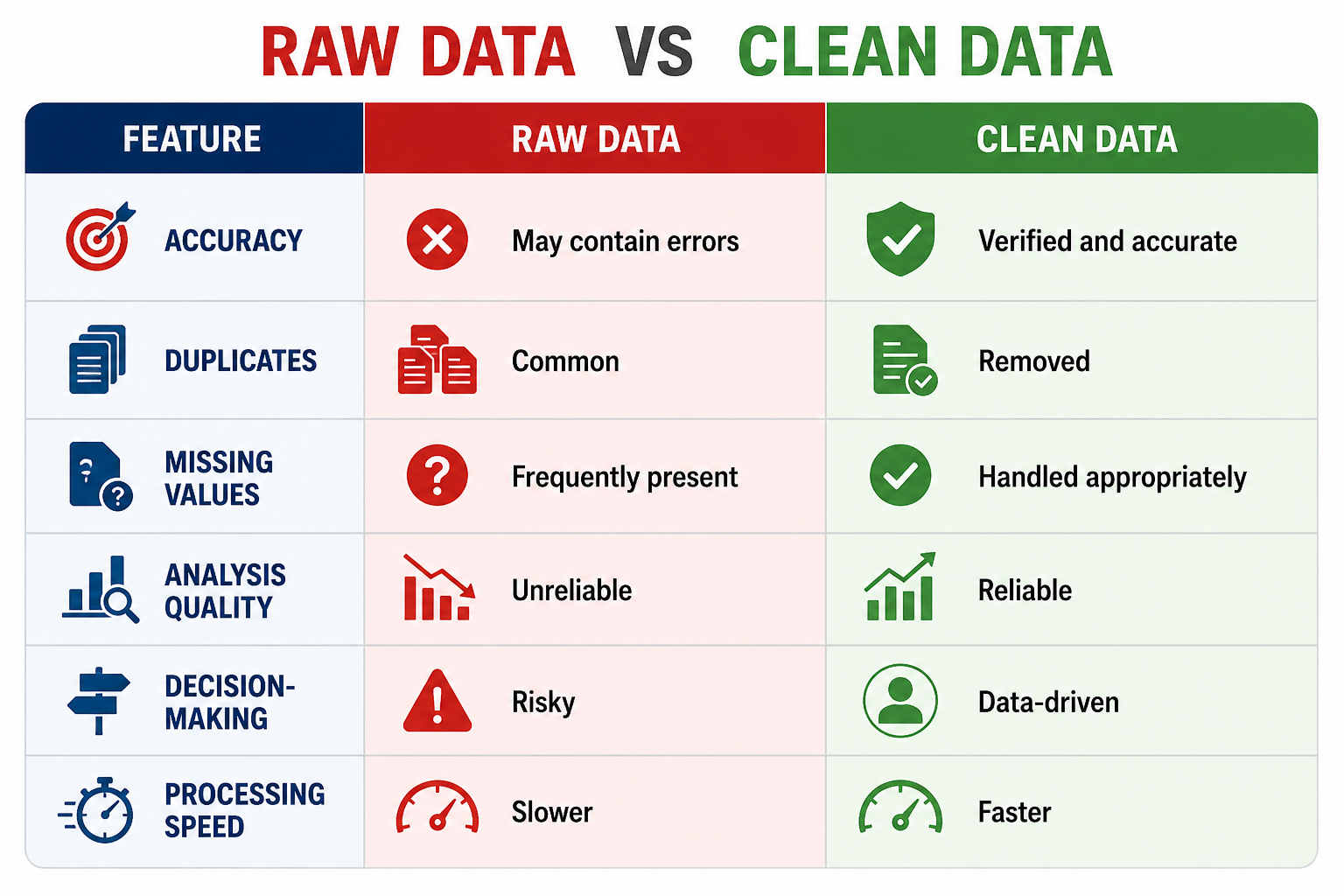
As we all know, the data cleaning process plays a pivotal role in improving the quality of data while eliminating various inconsistencies. They help identify various data issues like errors, duplication, and other missing values. Therefore, using the right data cleaning process helps you in validation, data standardization, handling missing values, and the uniformity of formats.
However, businesses are transforming their data by using data cleaning tools and software offered by Cognilix. We provide you with top-notch and AI-powered data cleansing, data standardization, data governance, and data diagnostic tools. This helps you in executing a profitable business by taking advantage of reliable, consistent, improved customer experiences and overall operational efficiency.

Pradeep Mehra
About the Author: Pradeep Mehra is a passionate content strategist and B2B technology writer with a deep understanding of industrial procurement, e-commerce, and digital transformation. With years of experience in crafting research-backed articles, marketing copies, and brand stories, he specializes in making complex topics like AI in procurement, supply chain automation, fintech, and industrial product innovation easy to understand and engaging to read. Beyond his writing, Pradeep is driven by a passion for discovering market insights and building digital communication strategies that strengthen brand connections.