






Published: October 28, 2026
How AI Is Changing Procurement in 2026: 10 Key Use Cases
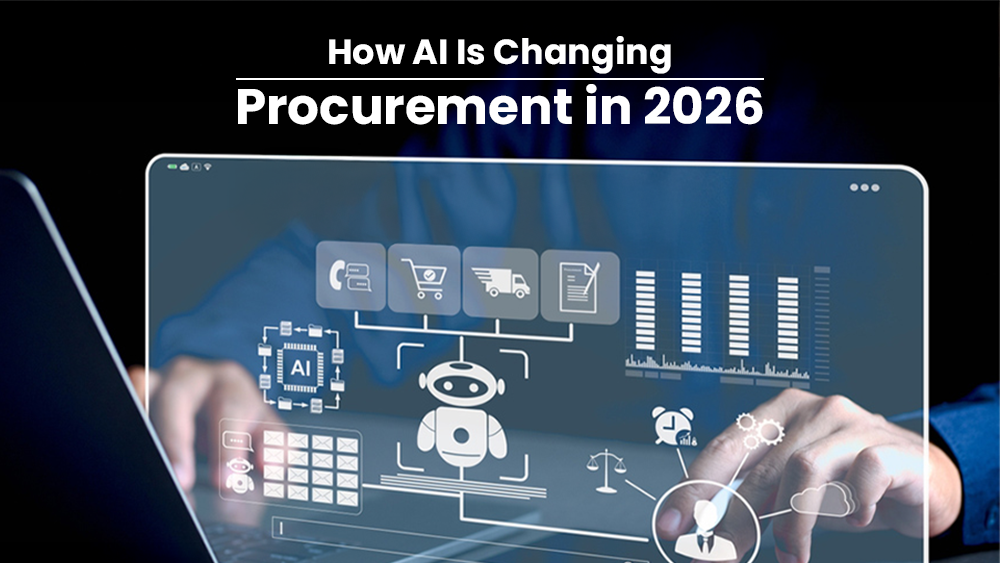
Procurement has gone beyond just bulk purchasing at the lowest prices. It is a reliable and smart strategy for businesses to improve their overall procurement workflow through the integration of AI. It has dramatically changed business procurement aspects by reducing the cost of purchasing, improving supplier relationships, and automating workflows.
Traditional procurement has become outdated and has been overtaken by smart procurement processes through AI integration, which has eliminated manual paperwork and supplier evaluation steps. Disconnected systems and unpredictable forecasts of spending. Therefore, AI in procurement has significantly transformed the process through an intelligent framework, spending analysis, AI agents, and generative AI. Let’s have a quick look at the top 10 use cases of AI in procurement for 2026.
Quick Look At The 10 Key Use Cases of AI in Procurement In 2026
We have curated a list of the top 10 use cases of AI integration in procurement and how it benefits the enterprise in various ways.
1. Intelligent Spend Analysis
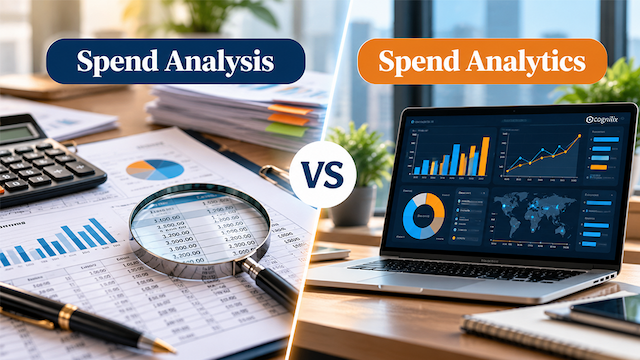
Spend analysis is one of the most advanced and intelligent AI tools out there. Using artificial intelligence within your business allows you to easily categorize procurement data, avoid duplication, and find areas of wasted spend.
Benefits:
- Better visibility of where your money is going and control of your budget.
- Find areas where you can save money.
- Avoid duplicated transactions and highlight any odd spend.
- Use data insights for better purchasing
2. AI-Powered Supplier Selection
Managing vendors and manual handling can sometimes be intimidating and can cause issues with relationships. This means that AI vendor management can help businesses compare and analyse vendors with specific and defined needs. Procurement teams will be able to easily find the correct vendors and compare quotes.
Benefits:
- Faster vendor assessment
- Better vendor comparison
- Consistent vendor selection based on criteria
- Less time spent manually searching for vendors.
3. Automated Purchase Order
Developing and curating POs can be challenging while handling them in bulk. This slows down the working process, and manual work increases te risk of discrepancies. So, to simplify the process, document validation and even extracting valuable data from POs through an AI-automated process can be very effective. Procurement teams can easily verify the data before the transaction and save their time for other processes.
Benefits:
- Elevates the purchasing process without compliance issues.
- Improves stability in purchasing orders
- Minimizes the risk of manual errors.
- No manual entries
4. Predictive Demand Forecasting
Predicting business efficiency in terms of inventory and overstocking is the foundation of the entire workflow. Using AI-powered inventory management tools helps enterprises save time in analyzing consumption rates, lead times, and even forecasting future needs in advance.
Key benefits:
- Synchronize the inventory with daily orders.
- Better control over stocking and cost optimization
- Reduce the risk of stockouts.
- Enhance overall planning in inventory management.
5. Supplier Risk Management
Establishing healthy relationships with suppliers is the primary duty of any business by fulfilling orders consistently. AI-powered tool allows businesses to better control every step related to suppliers by analyzing the requirements in advance, getting valuable records, and identifying external risk indicators.
Benefits:
- Enhance supplier collaboration
- Advance identification of supplier risk problems.
- Better control of the supply chain
6. Generative AI for Contracts and Documents
Manually handling multiple documents and addressing every quotation at the right time may be a time-consuming process. Therefore, using private GPTs and other generative AI models makes it easy for businesses to summarize the documents and get valuable outputs right on their table with lowest efforts.
Benefits:
- Decrease the manual process of document alignment.
- Easy to compare the contracts
- Boost the preparation process of documents
- Extract information for commercial purposes.
7. Intelligent RFQ Management and E-Auctions
For businesses, one of the most challenging tasks is to compare the RFQs from different vendors and suppliers. Therefore, when it comes to price differences and delivery timelines, opting for an intelligent RFQ tool can be very effective in extracting the critical information for quotations and flagging any missing information.
Benefits:
- Add better control over negotiation
- Easy to evaluate supplier information.
- Compare quotations precisely.
8. AI-Powered Inventory Optimization
Overall inventory management plays a pivotal part in an efficient business workflow. Using AI-powered inventory management helps in forecasting the demands for the future and analyzing consumption of products precisely.
Key benefits:
- Easy to optimize the overall working capital
- Better stock availability
- Supports proper management of obsolete inventory.
9. AI-Driven Supplier Relationship Management
SRM (Supplier Relationship Management) streamlines te overall work process for the business for long-term business process and better control over supplier relationships by improving the delivery timeline and reliability of product quality. Opting for AI-powered SRM automates the entire process with minimal manual effort.
Benefits:
- It supports better relations with suppliers
- Eliminates the probability of recurring issues
- Better accountability on supplier progression.
10. AI Agents for End-to-End Procurement
AI agents are an emerging technology that enables a range of tasks to be orchestrated across connected systems.
Benefits:
- Multi-step procurement tasks can be automated
- Time can be saved by reducing repetitive tasks across systems
- Improved orchestration of workflows
- Can free up time for strategic thinking.
What are the Benefits of AI in Procurement?
What improves the overall strength of AI while using it inside enterprises' procurement ERP, teams, and internal systems is listed below.
- The pricing of products, any duplicate purchases, or better predictive opportunities in the future can be identified easily.
- Minimizing manual tasks by using AI (purchase order automation, quotes, and documentation)
- Predictive insights to help source and budget
- Identify issues with suppliers
- Analyse purchasing data across different departments and locations
- Increased productivity - Allow your procurement team to focus on negotiation and sourcing
Conclusion
As we head into the world of Artificial Intelligence, businesses have started working on their workflow to automate them and remain ahead of other competitors. AI in procurement has been reshaping business work with complete automation in negotiation, supplier management, inventory management, and other RFQ processes.
So businesses are ready to prioritize and implement AI in procurement. It improves the workflow by analyzing the business objective with better insights and future forecasts. At Cognilix, we provide you with a complete set of AI-powered procurement tools that can enhance the overall process of businesses.