






Published: March 18, 2026
What Is Operational Efficiency: Meaning, Formula, Examples, And Tools
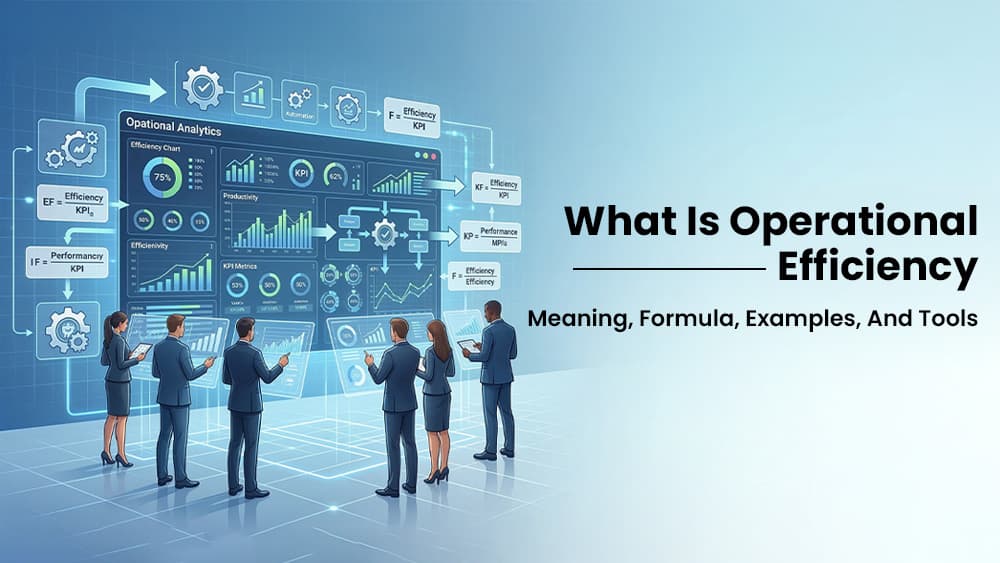
In this ever-evolving world of business competitiveness, organizations and companies seek to improve productivity and profit margins. To achieve overall growth in the entire business cycle, operational efficiency must be prioritized first. Therefore, proper utilization of operational efficiency helps in delivering better products and services, maximizing the productivity rate, and reducing waste without increasing resources.
So, whether you are running a startup, service company, manufacturing unit, or any other type of business, it is necessary to understand the operational efficiency for smooth and sustainable growth. Let’s dive deeper into the entire scenario of operational efficiency through examples, strategies, and AI-powered procurement tools to achieve operational efficiency.
What Is Operational Efficiency?
Operational efficiency refers to the ability of an organization or business to handle and deliver the best services and products while using the least number of resources without decreasing the quality of profitability. So, it helps in producing better outcomes at the lowest cost, with minimal effort and time.
An organization with high operational efficiency can:
- Reduce operational costs
- Increase productivity
- Improve product or service quality
- Deliver faster customer service
- Maximize profit margins
Why is Operational Efficiency Important?
For long term business growth with profitability and sustainability, adopting and prioritizing operational efficiency elevates the company's comparative advantage.
Key benefits include:
- Reduced Operating Costs: The overall operating cost of the business, including unnecessary expenses, resource consumption, and waste, are minimized thorugh right strategy.
- Higher Profitability: The moment operational costs decrease, and revenue remains stable or increases, it automatically improves the profit margins.
- Better Resource Utilization: Business can use their equipment, workforce, and technology at their best and make their top use cases.
- Retains Customer Satisfaction: With improved and proper utilization of operations, businesses can deliver products faster while maintaining quality.
- Competitive Advantage: Streamlined operation strategies lead to better pricing and services based on competitor analysis.
Understand the Operational Efficiency Formula
To measure the operational efficiency smoothly, we have provided you with a simple formula for comprehensive understanding.
Operational Efficiency Formula
Operational Efficiency = (Output ÷ Input) × 100
Where:
- Output = Total revenue or value generated
- Input = Total operational cost or resources used
Example Calculation
Let’s take an example of a company that generates a yearly revenue of Rs 10,00,000 by spending around Rs 7,00,000 on complete operations.
So, Operational Efficiency = (10,00,000 ÷ 7,00,000) × 100
Operational Efficiency = 142.8%
So, analyzing the complete scenario and figures, the company generated Rs 1.42 of revenue for every Rs 1 spent, which indicated a strong base of operational efficiency.
What are the Key Components of Operational Efficiency?
Multiple factors are responsible for enhancing and influencing the operational efficiency within an organization, such as:
- Process Optimization: Eliminating the unnecessary steps and delays to ensure a streamlined business workflow.
- Management: Without degrading the quality of products and services, it improves overall efficiency.
- Technology Adoption: Adopting digital tools for automation and analytics performance provides better insights and quicker results. It includes Data cleansing tools, spend analytics, RFQ management, and AI-powered intelligent procurement tools.
- Workforce Productivity: The proper training of the skilled employees and keeping them motivated, resulting in reliable operational efficiency.
- Resource Utilization: The proper usage of the materials and equipment ensures minimal wastage and saves time.
Quick Look at Examples of Operational Efficiency
For a better understanding, we have provided examples of operational efficiency for different industries. Let's have a quick look:
- Manufacturing Industry: For various manufacturing units and businesses, the integration of automated machines and data cleansing tools reduced the production time by 30%. With these results, output increased while labor cost remained the same.
- Logistics Company: Logistics companies can integrate route planning software to reduce their fuel consumption and delivery time.
- Customer Service Operations: A company can simply implement AI chatbots to handle the various type sof custoker queries, which reduces the workload of human agents.
- E-commerce Business: Inventory management software or tools help retailers to analyze and track their stock levels. So, the business can easily fulfill the orders quickly and reduce the risk of overstocking and out-of-stock issues.
Implement Reliable Strategies to Improve Operational Efficiency
Businesses can simply implement various strategies to improve operational efficiency. We have listed a few important strategies to follow:
- Process Automation: To automate the daily repetitive tasks such as billing, reporting, data entry, and other manual processes, businesses can implement tools and software.
- Lean Management: To improve productivity and business processes, lean principles should be focused on eliminating the risk of wastage.
- Employee Training: Providing the best training inputs and skills to your employees ensures better productivity and performance in overall operational efficiency.
- Data-Driven Decision Making: Using automated data cleansing, analysis, and performance metrics helps in identifying loopholes in operations and provides better opportunities for growing the business.
- Standard Operating Procedures (SOPs): Automating the documented workflow helps in maintaining consistency across multiple channels and departments, resuling into fewer operational mistakes.
Tools That Contribute to Achieving Operational Efficiency
As technology is booming continuously, it has streamlined and simplified the various workflows across various businesses.
- Automation Software (P2P automation, S2P automation, Vendor management)
- Customer Relationship Management (CRM) Tools
- Data Cleansing Tools
- Inventory management tools
- Project Management Tools
Operational Efficiency vs Productivity
Aspect | Operational Efficiency | Productivity |
Focus | Optimal use of resources | Output per worker |
Goal | Reduce waste and cost | Increase production |
Scope | Entire organization | Individual or team performance |
Conclusion
To remain competitive and stay ahead in every aspect of the business journey, focusing on operational efficiency is very important. Businesses can optimize their process, reduce waste, and incorporate technology to gain and improve productivity. Therefore, to improve operational efficiency, the business focuses on process automations, workforce productivity, and AI-powered procurement tools. So, to improve the business landscape, operational efficiencies are not just an option; it is a strategic necessity for optimum growth and profitability.