






Published: December 28, 2025
How Centralized Procurement Software Cuts Procurement Costs by 20%

The procurement is no longer just ordering without any strategy. Companies and large enterprises with great vision prioritize a procurement strategy that brings out the impactful margins, supply resilience, and speed to market. Therefore, the integration of centralized procurement software elevates the digital purchase to consolidate the sourcing, purchasing, and managing the approvals of suppliers through analytics and real-time insights. Therefore, opting for procurement management software like Cerebra and Cortex, offered by Cognilix, is one of the most effective tools and solutions to reduce procurement costs and drive sales effectively. For further in-depth information about the cost-effective centralized procurement system, we have curated a descriptive and comprehensive blog.
Quick Snapshot: Where The 20% Comes From
You must be thinking, in overall aspects, how procurement management software can reduce the purchase cost by 20%. Don't worry! Here is the quick bifurcation of every element responsible for reducing the overall procurement cost, such as:
- Lower unit prices
- Less Maverick spends
- Reduced process cost
- Lower indirect costs
- Fewer suppliers & better supplier terms
- Improved visibility
Let's have a better understanding through an example:
Suppose a company tends to spend around ₹100,000,000 on procurement annually. If we include a 20% reduction on complete spending, then it is ₹20,000,000 in annual savings.
Calculation: Multiply 100,000,000 by 20% = 100,000,000 × 0.2 = 20,000,000 (or 100,000,000 × 2 = 200,000,000 then ÷10 = 20,000,000).
How Centralized Procurement Software Delivers Great Savings with Benefits?
As businesses and industries are evolving in every aspect of their business strategies, procurement strategies can't be neglected. Therefore, incorporating a centralized procurement system or purchase order software is one of the most effective strategies in 2025. Let's understand how they help in achieving great savings.
- Volume Leverage & Smarter Negotiation: The fragmented buying across various departments leads to vague demand for suppliers. Integration of a centralized platform completely aggregates the demand across the enterprises, which assists in volume discounts, predetermined price bands, and strategic contracts. Example: Consolidating five regional buys with differing prices into one enterprise contract can immediately cut unit price by 5 - 10% on many categories.
- Supplier Consolidation and Rationalization: The most outstanding feature of procurement software is showcasing the precise and comprehensive supplier scorecards, resulting in the removal and renegotiations with underperforming and redundant suppliers. This means you have better pricing power, simpler logistics, and lower operating and compliance costs.
- Catalog-Driven and Compliant Buying: A complete and comprehensively guided catalog with pre-approved items assists buyers in choosing preferred items and suppliers. This helps in reducing the “maverick spend” and ad-hoc purchases. Additionally, the reduction in maverick spending has increased the savings percentage because buyers don't have much negotiation power during urgency conditions.
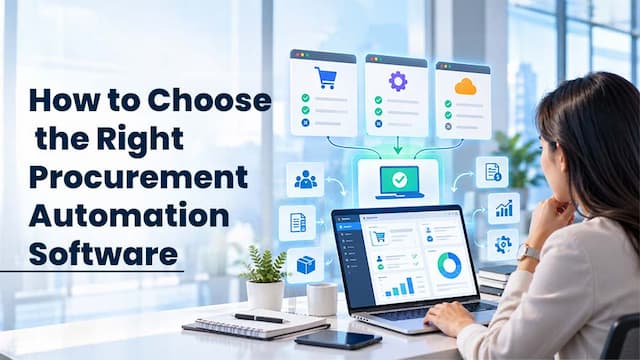
- Process Automation: Lower Transaction Cost: The Centralized Procurement system transforms manual procurement into an automated process. Handling emails, phone calls, paper POs, and reconciliation through a manual process is a daunting task. Therefore, procurement software automates and aligns payment workflows, invoice matching, and PO seamlessly.
- Faster Cycle Times: Less Working Capital Tied Up: Procurement software assists in reading the emergency purchase cost, expedited shipping, and inventory carrying cost by reducing procurement cycles and forecasting better demand planning. This unified portal provides better aggregated demand signals.
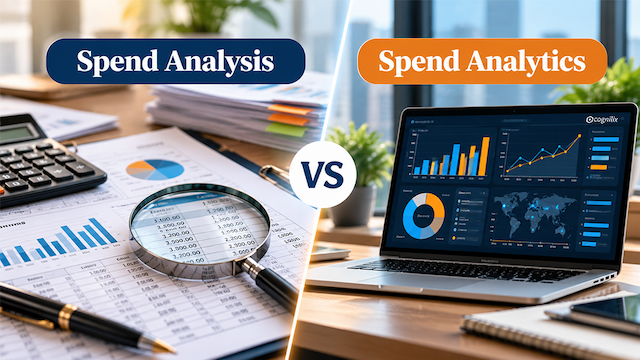
- Better Analytics: Integrating a centralized platform simplifies and gathers spend data in one place, making it easier to analyze and identify high-cost categories, seasonal trends, and supplier risk.
Technology & Integrations Through Centralized Procurement Model
When businesses and enterprises plan to integrate procurement software, they should know what technology and features they are going to get. Let’s have a look at them:
- Catalog & SKU management with live pricing
- Supplier portal for onboarding and invoice submission
- Spend Analytics / RFQ management with spend cube and category dashboards
- Centralized Buyer portal automation (PO, goods receipt, invoice matching)
- Audit trails & compliance for internal controls
- Demand planner for ERP, finance, and inventory
Cloud-based SaaS platforms are common because they scale quickly and integrate with enterprise ERPs.
What are the KPI to track and measure?
Once you have integrated the procure-to-pay software or centralized procurement software, you must know about the KPI to track and measure them precisely.
- The primary step is to analyze the price and contract savings. What are the fluctuations in savings and baselines?
- Analyze the total spend under management (SUM) routed through the platform.
- Focus on the percentage of “mavericks spend” outside of catalogs and contracts.
- Understand the PO cycle time and issuance duration.
- Check out the procession cost per invoice and days payable.
- Number of suppliers for the top 100 SKUs over time
Conclusion
A centralized buying or procurement platform for buyers and suppliers is more than just a regular tool. It combines real-time analytics, insights, and data that converts fragmented purchasing into a data-driven strategy and better negotiation powers. The savings for the company may vary based on company type and spend profile. However, to a greater extent, the proper integration of Cognilix purchase order software or procurement management software significantly reduces the cost by 20% through a combination of automation, analytics-ready ready and compliance for better growth and ROI.