






Published: March 6, 2026
What Is Category Management? Process, Examples, Steps, and Tools Complete Guide
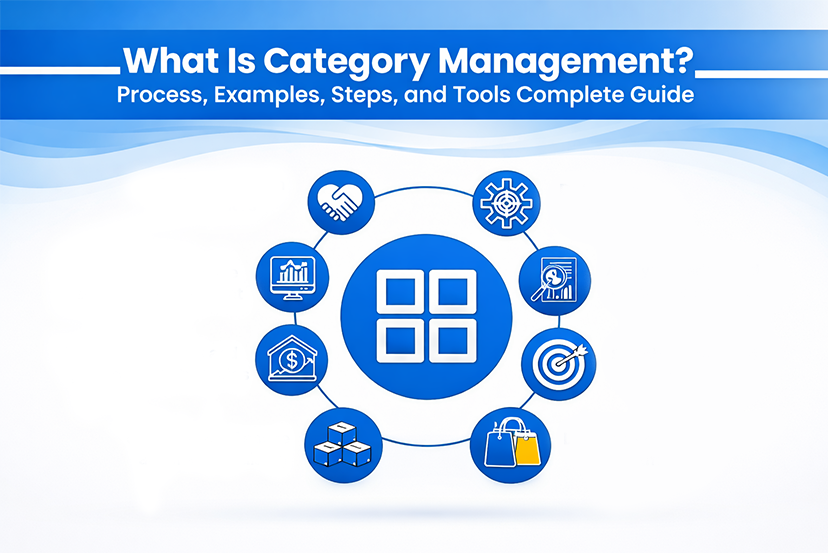
In the modern procurement and supply chain cycle, businesses look for reliable and cost-effective ways to improve their relationships with suppliers, making it more efficient by automating the whole process. In this complete scenario, one of the most effective and reliable approaches is the category management procurement strategy used by numerous organizations globally. Businesses and enterprises generally categorize similar products and services in a single pool and manage effectively through a category management tool or software integrated in their ERP system.
So, instead of buying goods and services individually, a category management strategy controls overspending, strengthens the supplier's performance, and establishes long term procurement values and relationships. Through this blog, we will explore more about what category management is in procurement through comprehensive examples, and understand ing the process, steps, and tools you can rely on.
What Is Category Management?
Category management is a reliable, powerful, and strategic approach for businesses and enterprises to categorize similar products or services under one group and manage them through a single business unit. Once categorized, every single group is managed dedicatedly to optimize the spending, supplier relations, and quality of procurement.
In procurement category management, categories may include:
- IT hardware and software
- Packaging materials
- Electrical equipment
- Logistics and transportation
- Office supplies
- Industrial tools and machinery
By bifurcating every product under different specific categories, it is much easier for procurement teams to conduct category management analysis and negotiate contracts precisely, while creating a comprehensive supplier market.
What is the Importance of Category Management in Procurement?
Implementing the procurement category strategy not only simplifies the procurement cycle but also gains better visibility and control over the entire purchasing activities. There are multiple benefits of category management, such as:
- Cost Optimization: The category management strategy helps the business to identify and optimize the cost of products and services seamlessly, while working proactively on volume negotiation, demand management, and supplier negotiations.
- Strategic Supplier Relationships: By empowering the category management allows and evelop long term partnerships with suppliers easily, instead of reluying of trasctiola purchasing.
- Improved Spend Visibility: It allows businesses to optimize and have better control over spending in the procurement cycle, resulting in the analysis and identification of inefficiencies.
- Better Risk Management: utilizing category management tools and system assist enterprises to identify the supplier risk, market fluctuation and supply chain disruption.
- Enhanced Procurement Efficiency: Equipping a category management system improves the efficiency of dedicated category managers to take batter decision and improve procurement outcomes.
Understand the Category Management Process
Before implementing the category management strategy, you need to focus on its process to understand the complete scenario precisely and then implement it. Let's have a quick look category management process:
Category Identification
The very first step is to find out the categories based on their spending and product similarity. For example:
Category | Example Products |
IT Equipment | Laptops, servers, and networking devices |
Industrial Tools | Power tools, cutting tools |
Packaging | Corrugated boxes, plastic crates |
MRO Supplies | Lubricants, spare parts |
Spend Analysis
Procurement Category analysis makes it easier for businesses to identify their spending for every single category.
Spend analysis typically includes:
- Suppliers spend breakdown
- Purchase frequency
- Price variations
- Contract compliance
Market Analysis
Once you have a clear understanding of the internal spending figures, the procurement team analyzes the market trends and suppliers.
Market analysis includes:
- Supplier capabilities
- Price trends
- Market competition
- Supply chain risks
Strategy Development
After collecting all essential data, it is analyzed precisely, and procurement teams develop a category management strategy.
The strategy may include:
- Supplier consolidation
- Long-term contracts
- Global sourcing
- Demand forecasting
- Cost optimization initiatives
Supplier Selection and Negotiation
After all analysis, procurement teams come to a single solution and select the suppliers based on:
- Cost competitiveness
- Quality standards
- Reliability
- Supply capacity
Implementation
After the supplier is finalized, the team curates a powerful and category plan across multiple scenarios and implements it seamlessly to avoid any kind of hindrances.
This step may involve:
- Contract management
- Procurement automation
- Supplier onboarding
- Internal policy alignment
Performance Monitoring
The final stage consists of analyzing the performance of the supplier and the procurement process. It includes other KPI sich as
- Cost savings
- Supplier performance
- Procurement cycle time
- Contract compliance
Consider the Steps to Implement an Effective Category Management Strategy
Building a successful category management strategy requires a systematic approach.
- Define Procurement Categories: Identify key spending areas and group similar items together.
- Assign Category Managers: Each category should be handled by a professional with strong category expertise.
- Conduct Spend Analysis: Use procurement data to analyze spending patterns and supplier performance.
- Develop Category Strategies: Create customized strategies for each category based on market dynamics.
- Implement Digital Tools: Use a category management system to track procurement activities and automate processes.
- Monitor and Optimize: Continuously evaluate category performance and refine strategies.
Let's understand it through an Example
Packaging Category
A manufacturing company spends heavily on packaging materials like cartons, crates, and plastic containers.
By applying procurement category management strategy, the procurement team discovers:
- Multiple suppliers with price variations
- Lack of volume discounts
After implementing a category management strategy, the company reduces supplier count and negotiates better pricing.
Result:
- 15–20% cost savings
- Improved supply reliability
Check out the Important Tools Used in Category Management
Modern procurement teams rely on digital tools to manage procurement categories effectively.
Popular category management system tools include:
1. Spend Analysis Software: It is one of the most reliable and advanced tools, which helps in tracking procurement spending. Businesses can opt for an AI-powered spend analysis tool, which provides better insights and trends on cost-saving opportunities.
2. Supplier Management Platforms: A supplier or vendor management tool or software can assist you in maintaining a complete database and tracking the performance seamlessly.
3. E-Procurement Systems: Opting for procure-to-pay or source-to-pay software helps in automating the complete approvals, purchase orders, PO conversions, smart RFQ and quotation management, and contract management.
4. Procurement Analytics Tools: Enable advanced category management analysis and market insights.
5. Strategic Sourcing Platforms: opt for top-quality, reliable, and trustworthy supplier evaluation and sourcing platforms like Cognilix. It helps in building stronger procurement strategies and improving purchase strategies.
Skills Required for Category Management
Successful procurement category management requires professionals with strong expertise and analytical skills.
Key skills include:
- Market analysis
- Supplier negotiation
- Strategic planning
- Data analysis
- Risk management
Professionals who specialize in specific categories develop deep category expertise, which allows them to make informed procurement decisions.
Future of Category Management
With digital transformation and advanced analytics, the future of procurement category management is evolving rapidly.
Emerging trends include:
- AI-driven procurement insights
- Predictive spend analytics
- Automated supplier risk assessment
- Cloud-based category management systems
Conclusion
Category management has been an efficient, effective, and modern procurement strategy to boost sales and drive business growth to reach new heights. It overall helps in streamlining the overall categories into strategic solutions such as optimizing spending, strengthening supplier relations, and improving overall procurement performance. Therefore, implementing the right procurement management analysis helps businesses achieve long-term cost-saving impact and smooth operations. However, using digital and AI-powered procurement tools helps category experts and professionals to implement a reliable and robust category management system and make the procurement process effective and smoother in futures.